


Formed between 2 and 5 million years ago within the core zone of Phong Nha – Ke Bang National Park, Son Doong Cave is the world’s largest natural cave, with an estimated volume of up to 12.5 million cubic meters. Beneath its colossal limestone chambers lies a remarkable underground world that exists largely isolated from the outside environment. Here, sunlight entering through giant dolines, an underground river, and unique climatic conditions have created an extraordinary ecosystem featuring a subterranean rainforest, a distinct microclimate, and a wide range of rare plant and animal species, including several that have only been discovered by scientists in recent years.
The Hidden Climate System Inside Son Doong Cave
One of the key factors supporting the ecosystem inside Son Doong Cave is its unique microclimate, which operates largely independently from the outside world. Thanks to its immense size, stretching nearly 9 kilometers in length, along with giant dolines and a river flowing throughout the cave, Son Doong is able to regulate its own temperature, humidity, and airflow, creating a living environment rarely seen anywhere else on Earth.
Unlike the harsh climate of central Vietnam, temperatures inside the cave remain remarkably stable throughout the year. During summer, when temperatures outside can exceed 37°C, the cave stays cool at around 22–25°C. In winter, temperatures typically range between 17–22°C, providing ideal conditions for mosses, ferns, plants, and many other organisms adapted to cool, humid environments.
High humidity combined with airflow passing through the massive dolines also creates the unusual phenomenon of cloud formation inside the cave. Thin clouds often appear during the summer months, floating between towering rock walls and the rainforest growing beneath the dolines, creating an almost surreal landscape. At the same time, temperature differences between the cave interior and the outside environment generate powerful moisture-laden winds that can be felt at the cave entrance.
During periods of heavy rain, water pours through the dolines from the forest above, forming spectacular curtains of waterfalls that descend hundreds of meters into the cave. This water not only helps maintain stable humidity levels but also nourishes lush vegetation in areas such as the Garden of Edam, supporting a unique ecosystem deep beneath the Earth’s surface.
The Dolines of Son Doong Cave: Gateways to a Hidden World
Geological faulting and erosion between 2 and 5 million years ago caused sections of the cave ceiling, composed of softer limestone, to collapse and form enormous openings. These dolines act as giant skylights, allowing sunlight and rainwater to reach the dark underground world below. Together, these elements created the conditions necessary for the development of extraordinary vegetation and tropical forests deep inside the cave.
Doline 1 (Watch Out for Dinosaurs)
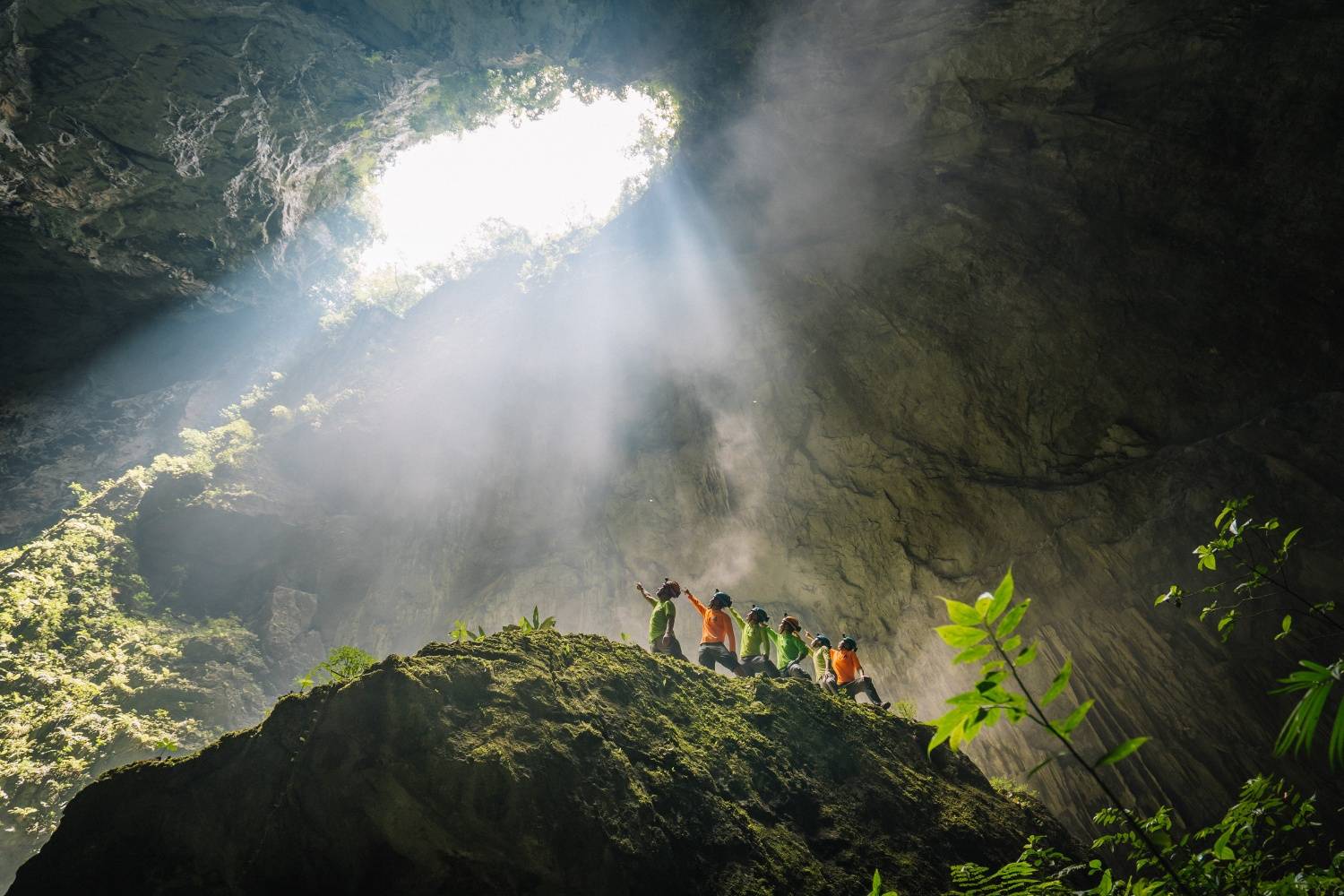
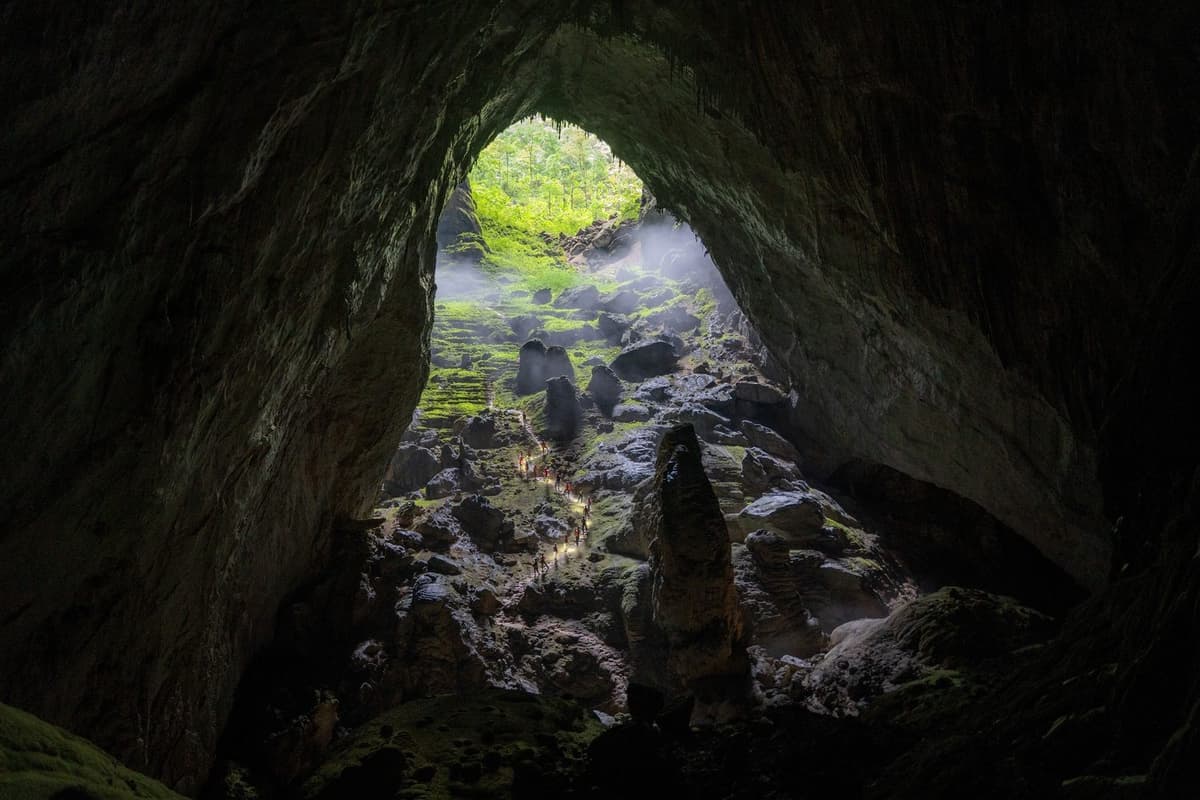
Doline 1 rises approximately 304 meters from the cave floor to the rim, making it one of the deepest and most impressive dolines in Southeast Asia.
Because the opening is relatively narrow, only limited sunlight reaches the cave floor. As a result, the area supports a distinctive ecosystem dominated by shade-loving and moisture-dependent plants. Mosses, ferns, climbing vines, and epiphytic plants cling to rock walls and stalagmites, absorbing moisture from the humid air. On the floor of the doline, shrubs and grasses that originated from seeds carried in by wind and water create vibrant patches of greenery within the vast cave chamber.
Doline 1 is also famous for its spectacular Sunbeam phenomenon. Between January and March, when lighting conditions are ideal, powerful shafts of sunlight penetrate the opening and illuminate the cave interior. The light reflects off giant formations, moss-covered slopes, and limestone surfaces, creating one of the most iconic and photographed scenes inside Son Doong.
Doline 2 (Garden of Edam)
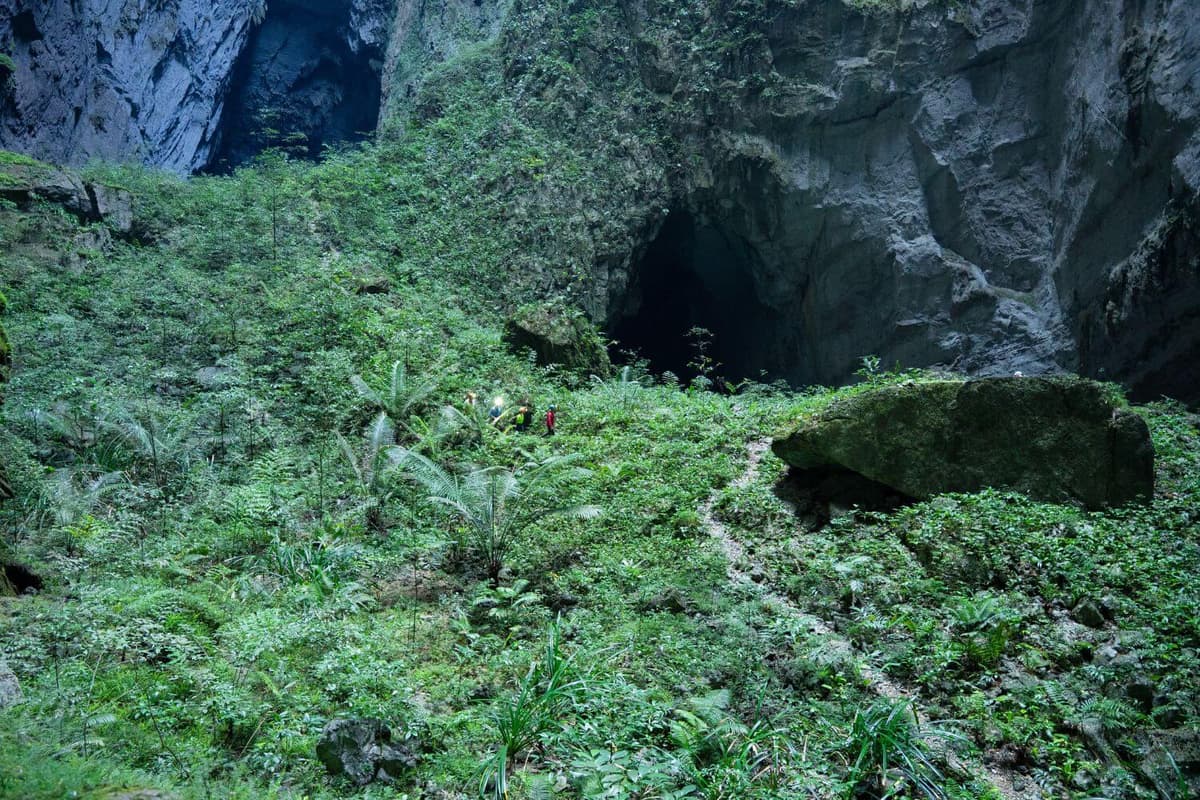
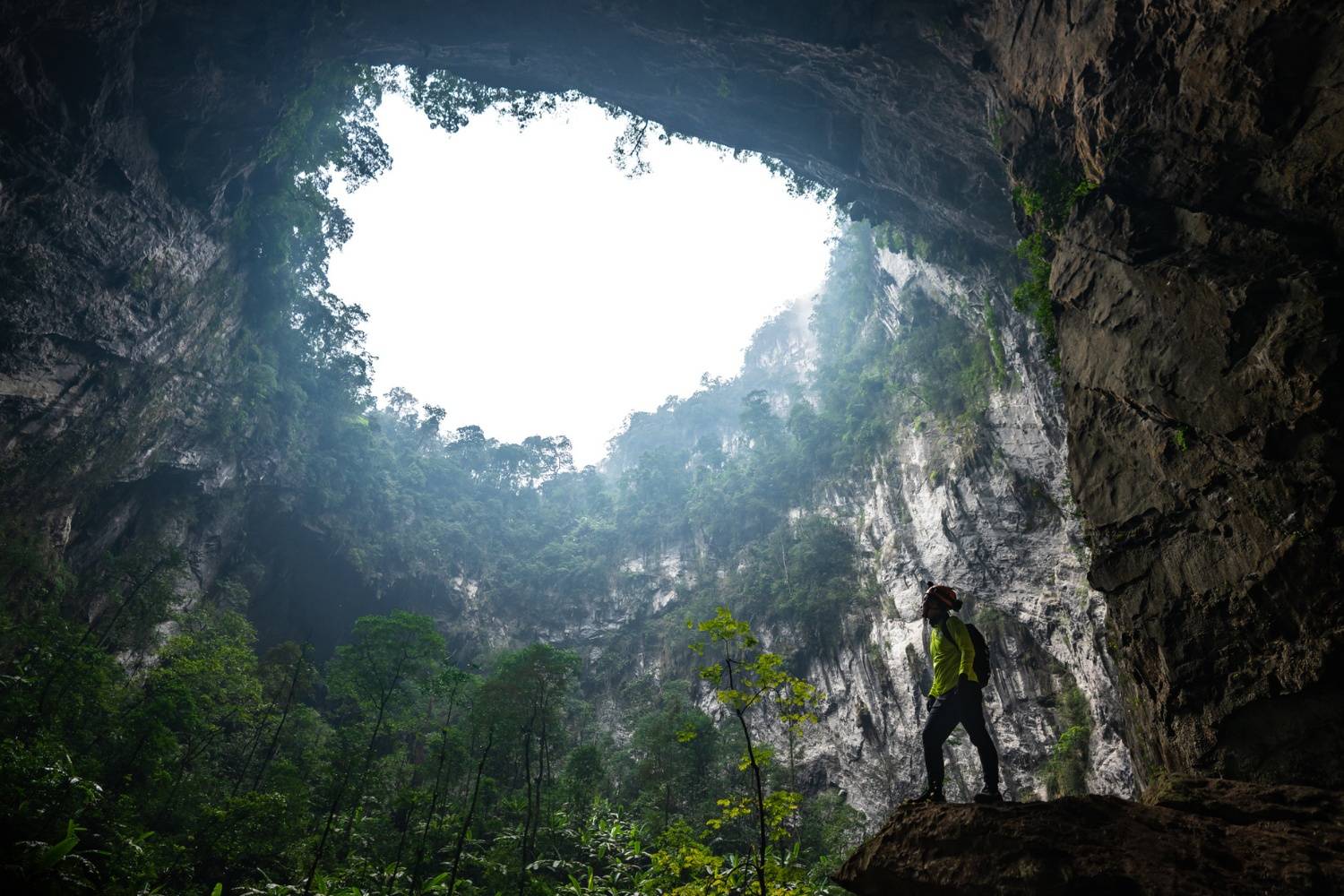
If Doline 1 marks the beginning of life underground, Doline 2 represents its fullest expression. With a much wider opening, this area receives abundant sunlight and rainfall throughout the year, creating ideal conditions for a thriving underground rainforest.
Named the Garden of Edam by explorers, this forest is so dense that visitors typically spend around 30 minutes trekking through it. The vegetation is arranged in layers similar to tropical rainforests found on the surface. Large trees reaching heights of 20–30 meters stretch toward the sunlight above, while beneath them grow dense layers of shrubs, ferns, vines, and other shade-tolerant plants.
The trunks and branches of these trees support numerous epiphytes, including orchids, mosses, ferns, and mistletoe. Constant humidity keeps the entire area covered in lush greenery. Scientists have recorded exceptionally high levels of plant diversity here, with hundreds of species growing within this isolated underground environment.
More than a geological wonder, the Garden of Edam demonstrates the remarkable adaptability of life. Some plant species have evolved unusual biological traits that allow them to survive in low-light and high-humidity conditions.
Today, Son Doong’s two giant dolines continue to serve as vital links between the surface world and the underground environment. By bringing natural light and water into the cave, they sustain life and create a landscape unlike that found in almost any other cave on Earth.
Flora and Fauna in the Darkness of Son Doong Cave
Beyond its immense scale and breathtaking scenery, Son Doong serves as a remarkable natural laboratory for biological evolution. Millions of years of isolation have created a unique environment where countless species have adapted to near-total darkness, high humidity, and limited nutrient availability. Scientific surveys have documented hundreds of plant and animal species living within the cave, including endemic species, newly discovered species, and rare evolutionary adaptations found in very few places on Earth.
Cave-Dwelling Animals and Their Extraordinary Adaptations
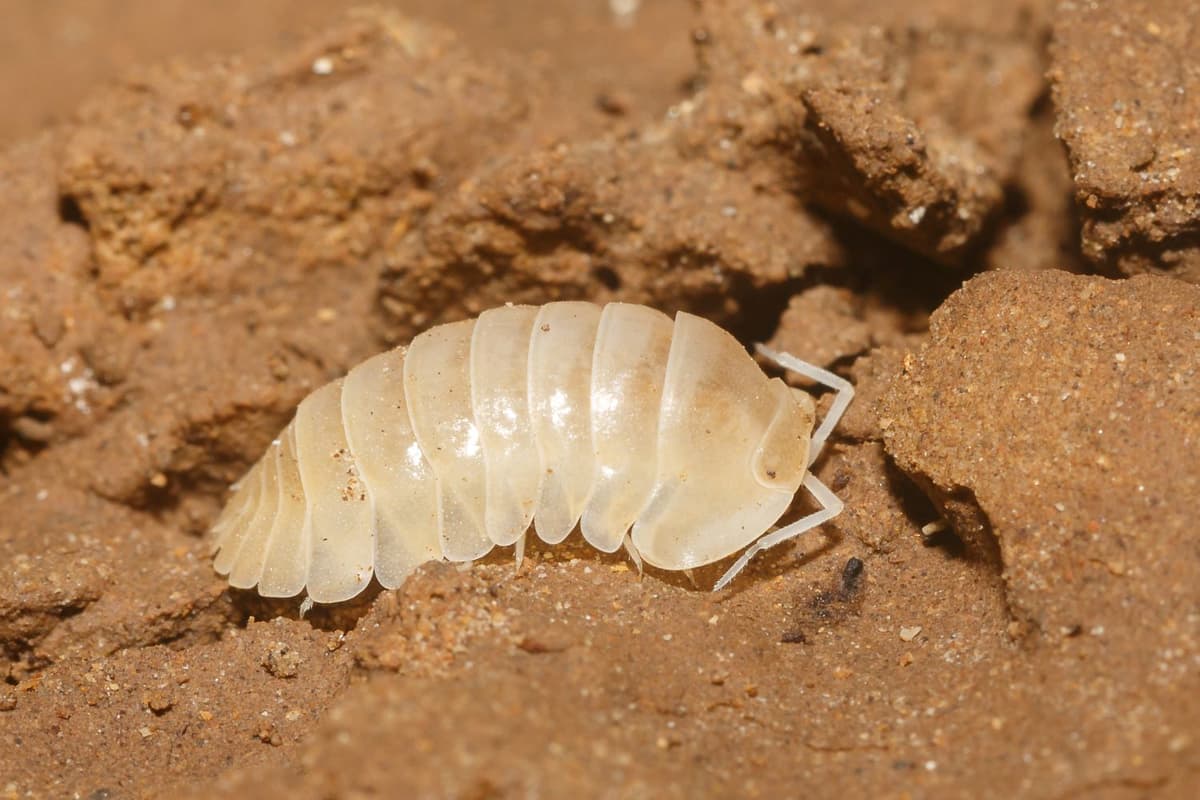
The light-deprived environment forces many animal species in Son Doong to evolve in completely different trajectories compared to their counterparts living outside. The most common characteristics are the reduction or loss of eyes (visual reduction/eyelessness), pale or almost transparent bodies (depigmentation), and elongated appendages to enhance their ability to sense the surrounding environment.
Scientists have recorded up to 80 arachnid species in the Son Doong cave system and its vicinity. Notably, there are 10 new species published in the 21st century and 13 unidentified species, which are highly likely to be completely new to science. Several cave spider species possess pale bodies, with reduced or completely lost eyes, reflecting a prolonged evolutionary process in the dark.
One of the prominent recent discoveries is the Son Doong cone snail belonging to the genus Calybium, found in the Doline 1 area. This is a completely new species of land snail, never recorded anywhere else in the world. Additionally, researchers also discovered camel crickets living deep in the dark zones of the cave. This insect is evaluated as potentially new to science and highly endemic.
The cave ecosystem also records the presence of many ground beetles (carabid beetles) belonging to the genera Amphimenes, Itamus, and Metacolpodes. These are animals well-adapted to the dark, humid environment and are considered a characteristic faunal group of Son Doong.
Specifically, the existence of the primary forest beneath the doline has created a rare ecological intersection (ecotone). Surveys have recorded up to 22 arachnid species, which normally only live in natural forest environments outside, yet can develop stably right inside the cave. This indicates that the Garden of Edam is not only an underground forest but also an ecological bridge between the subterranean world and the surface ecosystem.
Primary Flora Thriving Underground
Biological surveys in Son Doong have recorded over 200 plant species, including 161 vascular plant species belonging to various groups such as clubmosses, ferns, and magnolias. This diversity makes Son Doong one of the most distinctive cave ecosystems ever studied in Vietnam.
The flora in Son Doong ranges from mosses, ferns, and herbaceous plants to large timber trees developing in the Garden of Edam area. On the tree trunks, numerous epiphytes such as orchids, mistletoes, and ferns appear, contributing to a multi-layered ecological structure rarely seen in a natural cave.
One of the most fascinating discoveries is the Trong dua tree, which possesses a special survival mechanism where its seeds begin to root while the fruit is still hanging on the branch. This is considered an effective adaptive solution to the nutrient-poor environment and extreme growing conditions inside the cave.
In addition, scientists have also recorded the presence of the Chan trau den tree, a rare characteristic plant species in the Son Doong ecosystem. The surveys also discovered two plant species new to Vietnam, along with many unidentified specimens, opening up significant research potential for biodiversity in this region.
The Mysterious Fossilized Skeleton Near the End of Son Doong Cave
In addition to the remains of ancient marine organisms, Son Doong also preserves a special discovery that arouses great curiosity among tourists and researchers. Near the end of the cave, atop a large travertine hill, lies a nearly intact fossilized skeleton of an ungulate species, akin to a deer or goat.
The skeleton is approximately 2 meters long and retains most of its body structure, missing only the skull. Although not millions of years old like the ancient marine fossils, this remains a natural relic of special value. Scientists hypothesize that the animal might have accidentally fallen into the cave through a natural doline, then struggled to find an escape route, eventually dying of exhaustion on top of the sandy, rocky hill.
Over decades, the continuous dripping of mineral-rich water has coated the skeleton with a thin layer of calcite. This natural mineralization process creates a sparkling crust surrounding the bones, interspersed with cave pearls formed nearby. Under the lights of the expedition team, the skeleton appears like an artifact preserved in crystal, creating a scene that is both mystical and impressive in the depths of the cave.
The ancient marine fossils, along with the naturally preserved animal skeleton, have transformed Son Doong into a vivid geological chronicle. Every rock layer and every remaining trace of organisms contributes to telling the story of the Earth’s transformation over hundreds of millions of years, from the ancient ocean to the magnificent ecosystem existing in the cave today.
Son Doong is one of the most extraordinary cave ecosystems on the planet, where geological, climatic, and biological processes have coexisted and evolved over millions of years. The value of Son Doong lies not only in its record-breaking dimensions but also in its role as a precious natural heritage that requires long-term conservation. Every responsible expedition and every shared story about Son Doong contributes to spreading awareness about protecting Vietnam’s unique natural wonders.