


The Son Doong Cave Expedition takes you deep into the world’s largest natural cave, a dream journey for travellers who are drawn to wild landscapes and true adventure. Recognised by National Geographic UK as one of the world’s most remarkable adventure experiences, this expedition is best known for its giant cave passages, towering dolines, and otherworldly underground scenery. Yet for many guests, one of the most surprising and memorable parts of the journey is the food.
In the remote core zone of Phong Nha – Ke Bang National Park, there are no restaurants, roads, or modern kitchen facilities. Every ingredient must be carefully packed, carried through the jungle, and prepared in challenging conditions. Even so, the local cooking team serves fresh, hot, and nourishing meals throughout the expedition. After hours of trekking, river crossings, and cave exploration, sitting down to a warm meal inside Son Doong feels like much more than a simple break. It becomes a moment of comfort, connection, and quiet wonder in the heart of the world’s largest cave.
What Will You Eat on the Son Doong Cave Expedition?
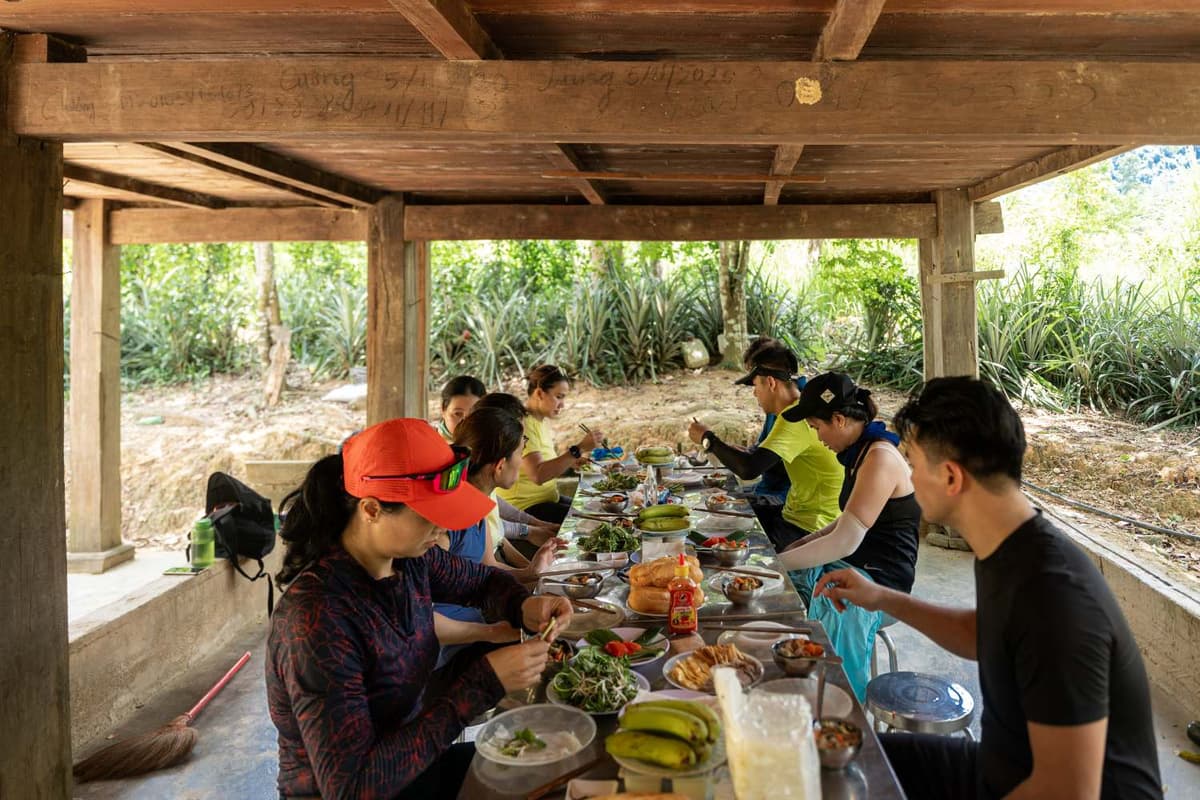
During the 4-day, 3-night Son Doong Cave Expedition, guests are served 10 main meals, along with simple evening snacks such as grilled corn, sweet potatoes, or roasted peanuts, depending on the group’s needs. Because the journey includes long trekking days, river crossings, and physically demanding cave exploration, every meal is carefully planned to give guests enough energy for the expedition.
The menu is designed to be balanced, with protein, vegetables, fibre, and carbohydrates in each day’s meals. This helps guests stay full, recover well, and feel ready for the next part of the adventure. Dishes change from day to day, combining traditional Vietnamese flavours with a few familiar international options to suit travellers from different countries.
Breakfast is usually a warm and comforting start to the day. Whether you are waking up beside a jungle campsite or deep inside the cave, you may enjoy dishes such as Vietnamese beef steak with bread, steamed rice rolls with pork, thick noodle soup with ribs and Vietnamese pork sausage, stir-fried noodles, pancakes, or toast with fried eggs. Hot tea and coffee are also served in the morning, giving everyone a welcome boost before the day begins.
Lunch is prepared by the Oxalis chef team and is made to be filling but not too heavy. A typical lunch may include steamed rice with caramelised pork, chicken stir-fried with onions, fried spring rolls, and tomato soup. On some days, the menu may change to fried rice or bread served with Vietnamese-style beef stew, adding more variety to the expedition meals.
After a long day of trekking through the jungle, crossing streams, and moving across challenging cave terrain, dinner is often one of the most anticipated moments of the day. Once guests return to the campsite, swim, and freshen up, everyone gathers around the dining table for a hot meal in the middle of the wilderness. Dinner is usually the most generous meal of the day, with several dishes served together in a family-style setting.
A typical dinner on the Son Doong Cave Expedition may include around seven dishes, carefully prepared and presented by the cave chefs. These can include smoked meat, fish-sauce fried chicken, roasted pork, grilled chicken, fried eggs, stir-fried vegetables, and pumpkin soup. Fresh seasonal fruit is often served at the end of the meal as a light dessert.
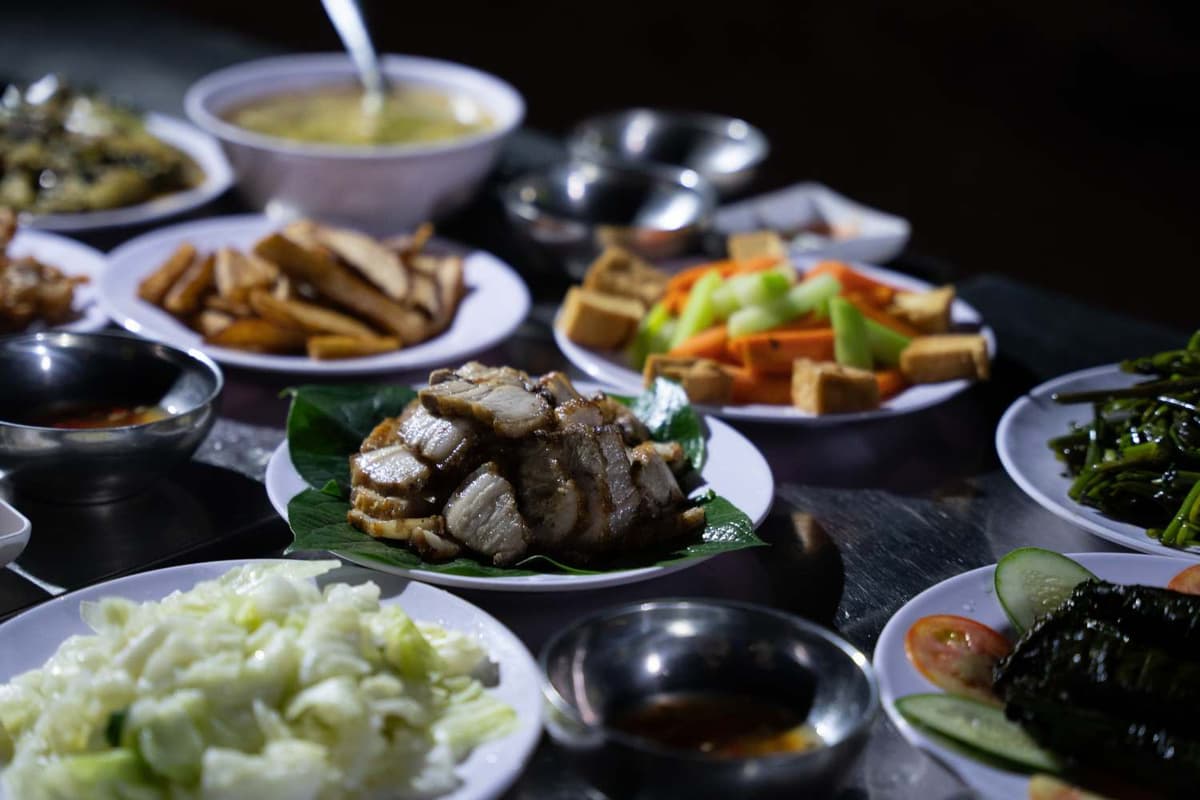
Vegetarian meals are also available on the Son Doong Cave Expedition. The vegetarian menu may include dishes such as vegetarian spring rolls, boiled vegetables, tofu in tomato sauce, vegetarian beef wrapped in betel leaves, pumpkin soup, and stir-fried greens. These meals are still carefully prepared, nicely presented, and designed to be nourishing and satisfying, so vegetarian guests can enjoy the journey with peace of mind.
As the expedition takes place deep in a remote jungle and cave environment, there are no shops, restaurants, or places to buy extra food along the way. For this reason, guests are asked about their dietary habits and special requirements before the trip begins. If you are vegetarian, have food allergies, follow a specific diet, or need a special meal arrangement, it is important to inform the operation team in advance. This allows the team to prepare suitable meals for you throughout the expedition.
Hot Meals in the World’s Largest Cave: A Comfort After Every Day of Adventure
Most meals on the Son Doong Cave Expedition are familiar Vietnamese dishes, along with a few simple Western options that are easy for international guests to enjoy. Yet what makes these meals truly special is not only the food itself, but where you eat it. After a long day of trekking, crossing rivers, walking through the jungle, and exploring giant cave passages, sitting down to a hot meal at camp feels deeply comforting.
You may find yourself dining beside a cool underground stream, beneath a massive cave arch, or in a quiet campsite surrounded by ancient limestone walls. In that moment, the meal becomes more than just food. It is a chance to rest your body, regain your energy, and enjoy a rare sense of calm in a wild place almost completely separated from the outside world.
During the expedition, guests stay at 3 different Oxalis campsites: Hang En Campsite, Doline 1 Campsite, and Doline 2 Campsite inside Son Doong Cave. Each campsite has a clean dining area with tables, chairs, and backrest seats, so guests can relax, drink tea or coffee, and take in the view after a day of adventure.
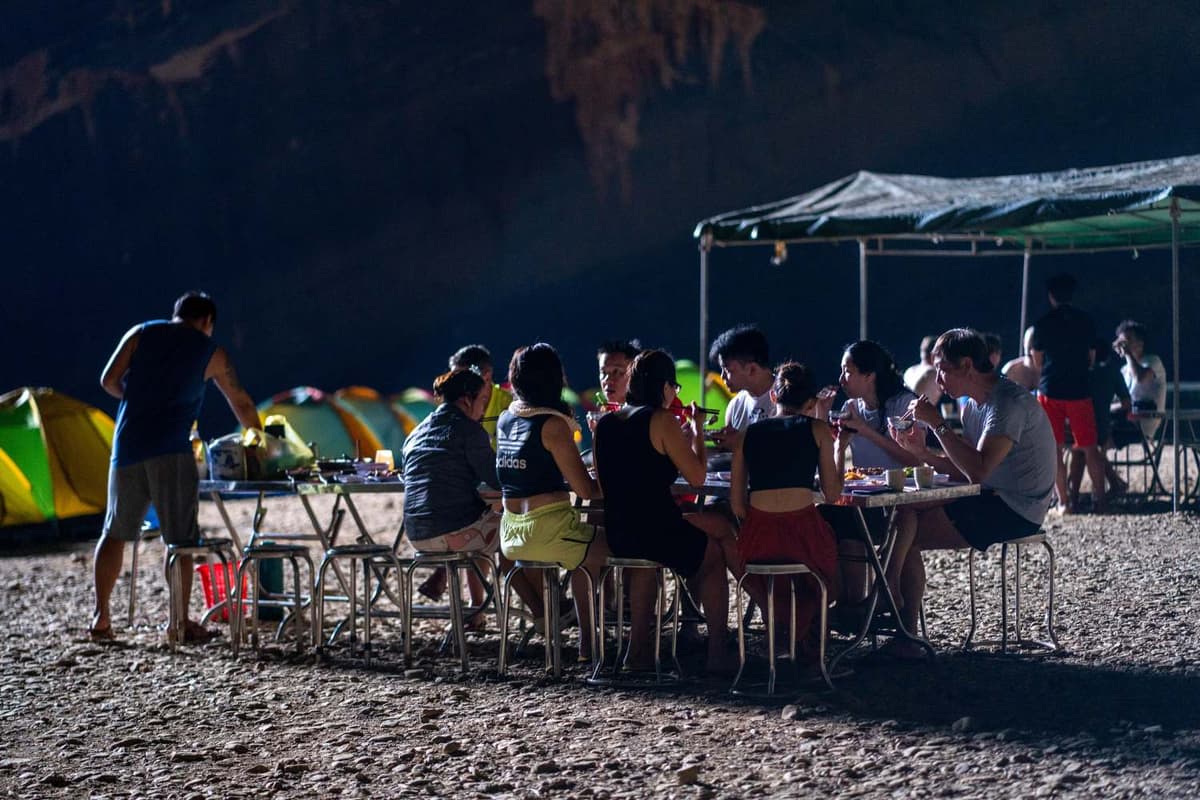
Here is what the dining experience may look like across the 4-day Son Doong Cave Expedition:
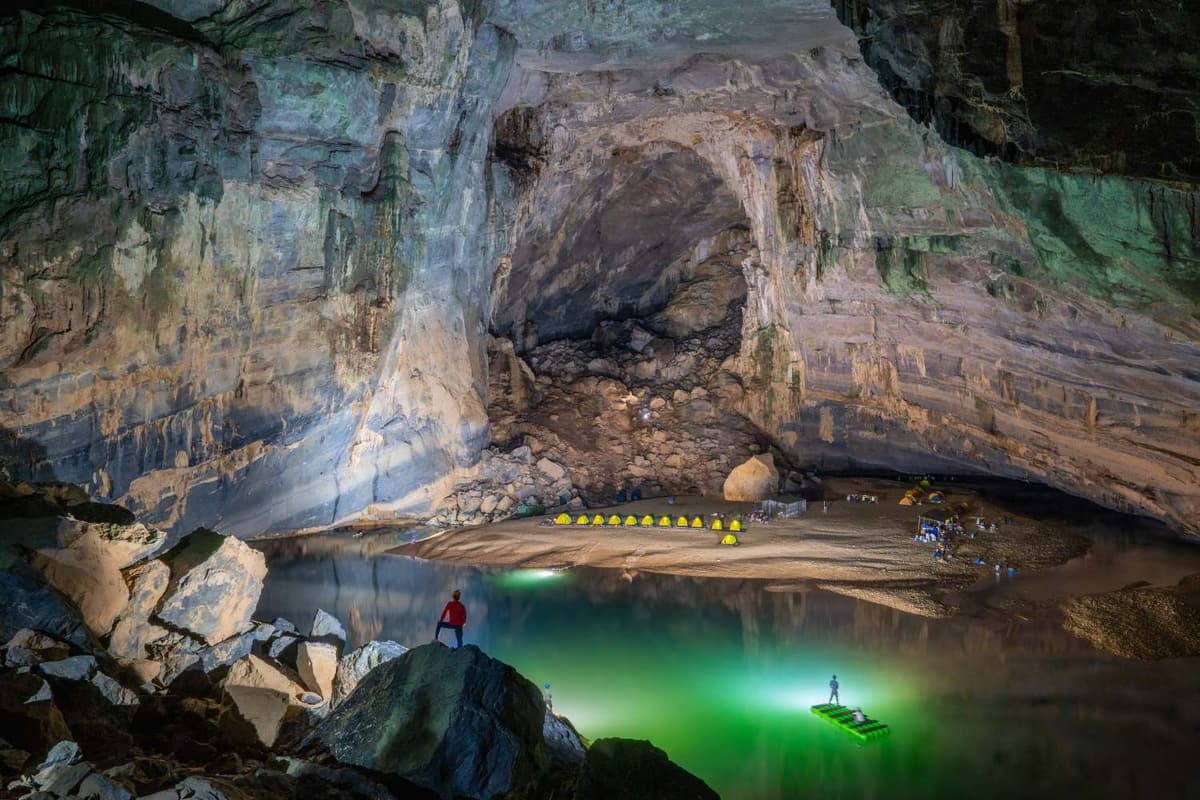
- Day 1: Guests have lunch at Doong Village before continuing the trek to Hang En Cave. Dinner is served at the campsite inside Hang En, beside an emerald underground lake, beneath a vast cave ceiling, and close to a cave entrance rising about 110 metres high.
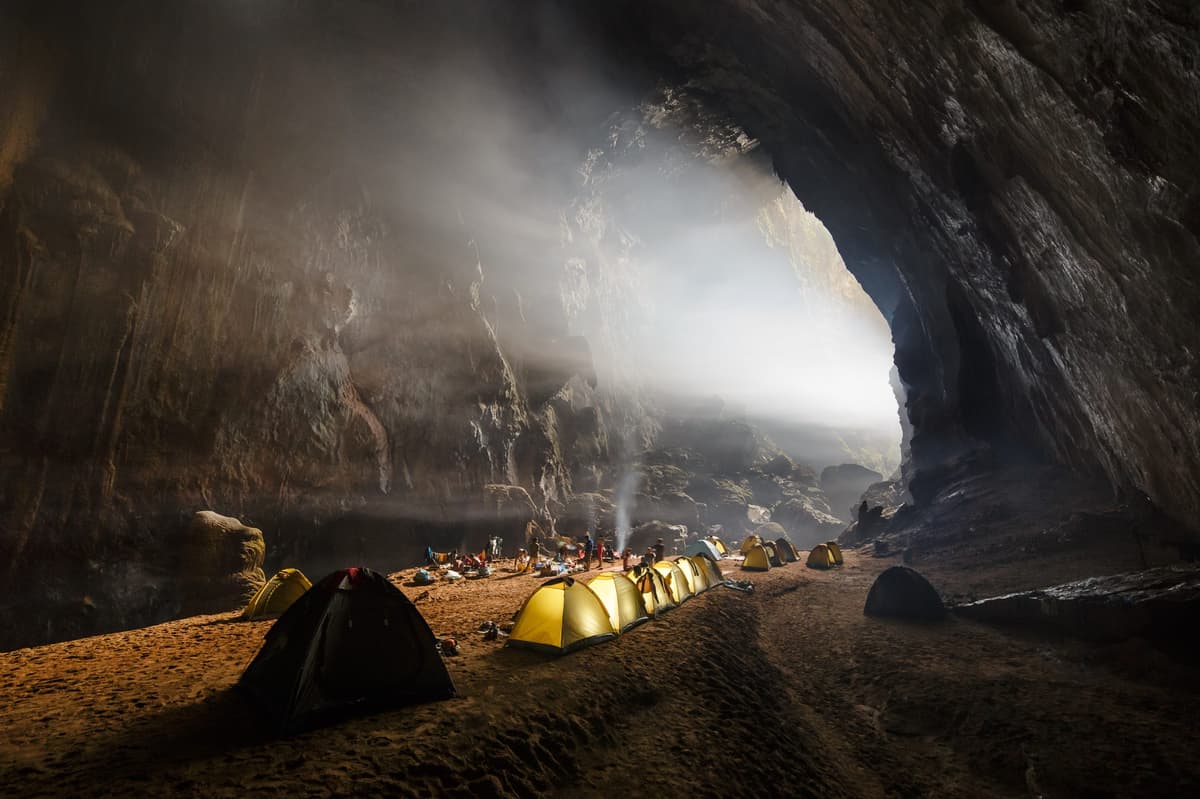
- Day 2: After breakfast at Hang En Campsite, guests have lunch near the entrance of Son Doong Cave before entering the enormous underground world. In the evening, the group stays at Doline 1 Campsite, where you can look towards the misty doline deep inside the cave.
- Day 3: Guests enjoy breakfast at Doline 1 Campsite, then continue deeper into Son Doong before stopping for lunch and dinner near the beautiful underground pools at Doline 2 Campsite. This is one of the most atmospheric parts of the journey, where the stillness of the cave makes each meal feel even more special.
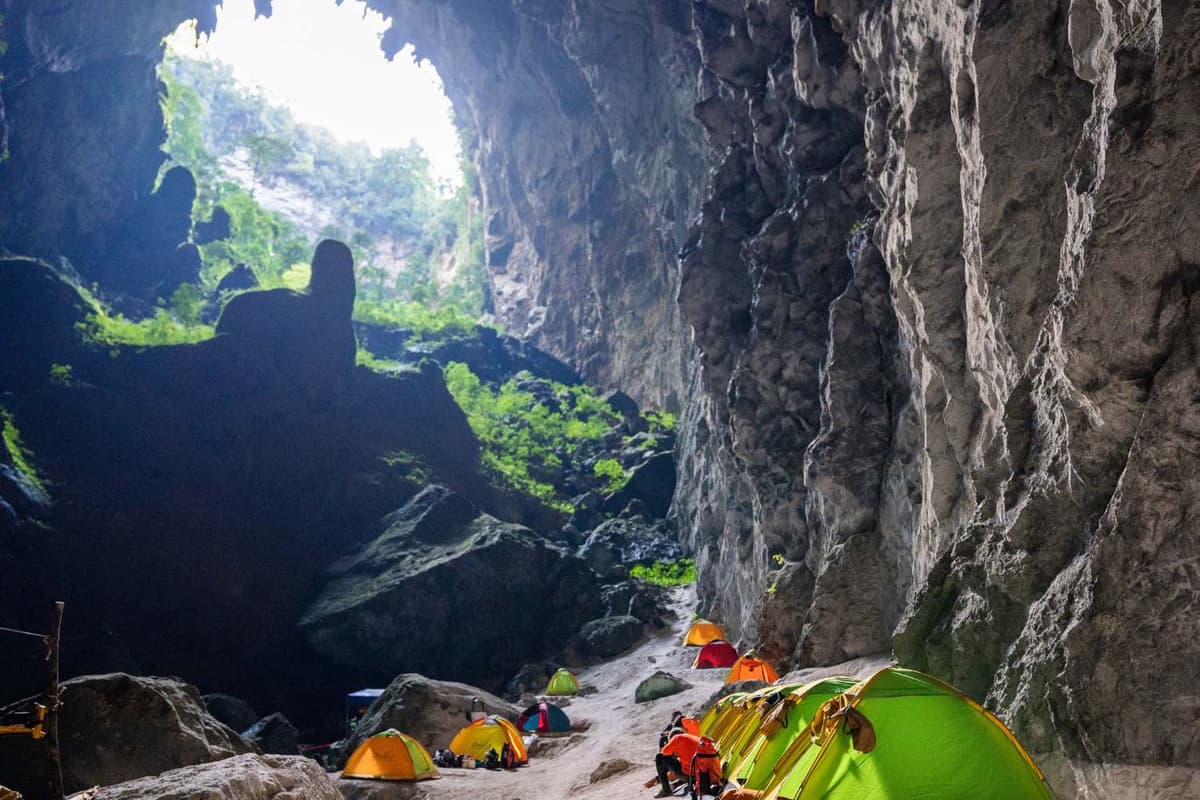
- Day 4: Breakfast is served at Doline 2 Campsite, close to the Garden of Edam, a primeval forest hidden deep underground. The final lunch is usually served after guests climb over the Great Wall of Vietnam, marking the last stage of the journey before leaving the cave.
Behind the Hot Meals in Son Doong Cave
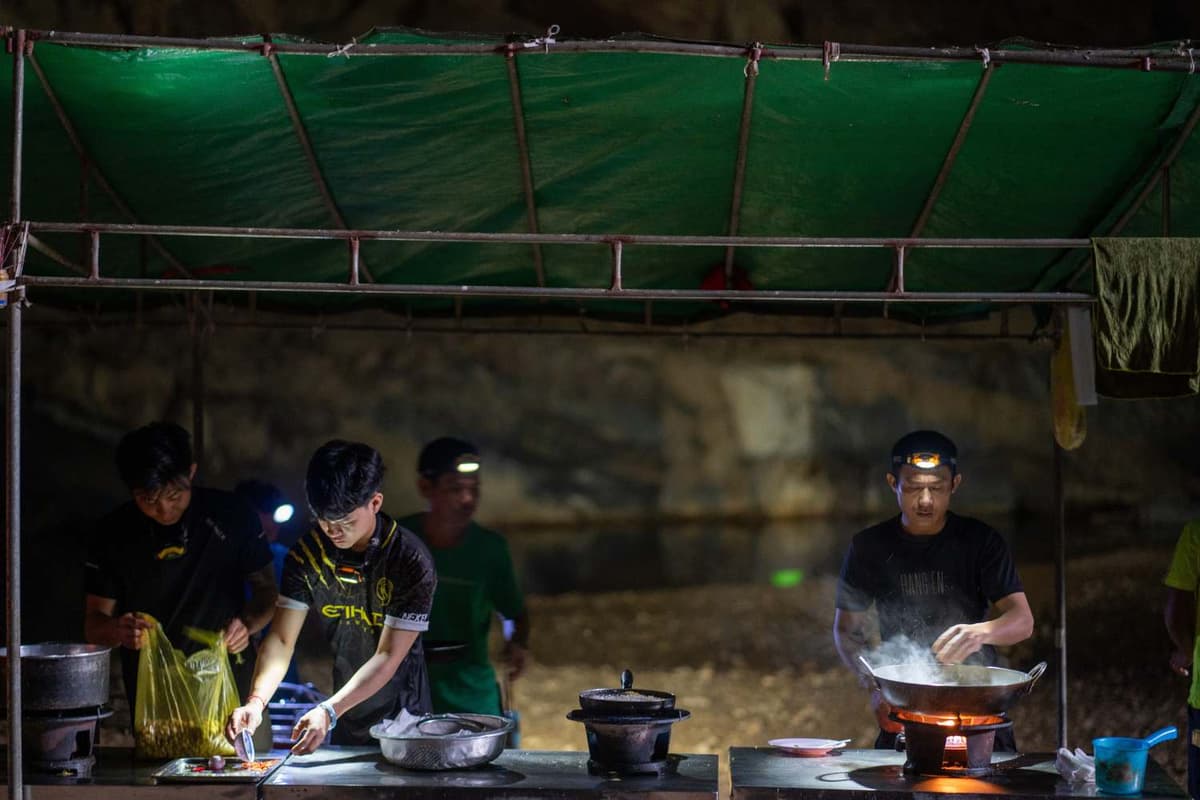
One of the things that often surprises guests on the Son Doong Cave Expedition is that, even deep in the jungle and at campsites set inside a giant cave, meals are still served hot, fresh, and well prepared. Behind every meal is careful planning and the hard work of a professional operation team.
Each expedition usually has one chef and one assistant chef travelling with the group. Cooking in the cave requires far more than kitchen skills. The chefs also need strong physical endurance, as they follow the same jungle trails, cross the same rivers, and move through the same cave passages as the guests. Along the way, they carry more than 10 kilograms of personal gear and essential cooking equipment.
To keep the menu varied throughout the journey, the food is carefully calculated and prepared before the expedition begins. Because Son Doong and its campsites are located deep inside the forest, keeping ingredients fresh is one of the biggest logistical challenges. Food supplies are divided into different stages instead of being carried in all at once.
For the first 2 nights, ingredients are brought in with the team during the first part of the journey. On the third night, fresh supplies are delivered from the cave exit side. To do this, the support team moves in the opposite direction and crosses the Great Wall of Vietnam to bring food to the campsite. Thanks to this careful arrangement, guests can enjoy fresh, hot, and nourishing meals even in one of the most remote cave environments in the world.
Food Safety Is Always a Top Priority for Oxalis
On a multi-day expedition through deep jungle and cave environments, meals need to be more than tasty and filling. They must also be safe. For this reason, food hygiene and safety are always among the top priorities for Oxalis Adventure when operating the Son Doong Cave Expedition.
The process starts before the journey begins. Ingredients are carefully selected from trusted suppliers, including Co.opmart, as well as from local households in the Phong Nha area. To keep the food fresh during the expedition, ingredients for the first 2 days are prepared and carried in at the beginning of the journey. For the following days, new supplies are delivered to the team along the route.
Each Son Doong expedition has a chef travelling with the group to prepare and serve meals directly at the campsites. Many Oxalis chefs are local people from Phong Nha, with long experience moving through the forest and cooking in natural conditions. They are also carefully selected and trained by Oxalis in cooking, food hygiene, and service procedures for expedition tours.
To protect the health of guests and the operation team, the chefs have annual health checks to make sure they are fit to work on expedition tours. Oxalis also organises chef competitions to select skilled cooks for the Son Doong Cave Expedition, helping maintain a consistent dining standard throughout each tour season.
Water quality is controlled just as carefully as food. All drinking water along the route, as well as water used at the campsites for cooking, making tea or coffee, and brushing teeth, is filtered through a Watts water filtration system imported from the United States. Oxalis Adventure tests the water quality every year to ensure it meets drinking water standards. At each campsite, the support team also prepares hot water so guests can enjoy tea or coffee during their rest time.
Leave No Trace: Protecting Son Doong After Every Expedition
To operate the Son Doong Cave Expedition in a sustainable way, every meal served in the cave is supported by a carefully controlled system that helps reduce environmental impact as much as possible. Everything brought into the cave, from food and cooking equipment to camping gear and personal items, must be strictly managed and carried out after the trip under the Leave No Trace principle.
Behind each group of guests is a trained team of local porters who carry equipment, food supplies, and waste throughout the journey. At the campsites, daily waste such as tissues, packaging, leftover food, and personal items is sorted according to Oxalis procedures. Waste is divided into three main groups: organic waste, recyclable waste, and general waste. Each type is collected and handled separately. When the group leaves, all sorted waste is carried out of the forest by the porters, helping keep the campsites and cave environment clean.
Oxalis also sets up mobile composting toilets at the campsites, known as Oxalis Composting Toilets. These toilets use rice husks carried in by the porters and do not require water, which helps reduce impact on the cave environment. Used waste containers are carefully sealed and carried out of the cave to a composting area, where they are treated according to proper procedures.
These efforts show that dining on the Son Doong Cave Expedition is not only about enjoying hot, nourishing meals in a spectacular natural setting. It is also closely connected to conservation responsibility. Every meal, every campsite, and every part of the operation reflects a wider commitment to keeping Son Doong as pristine as possible after each expedition.