


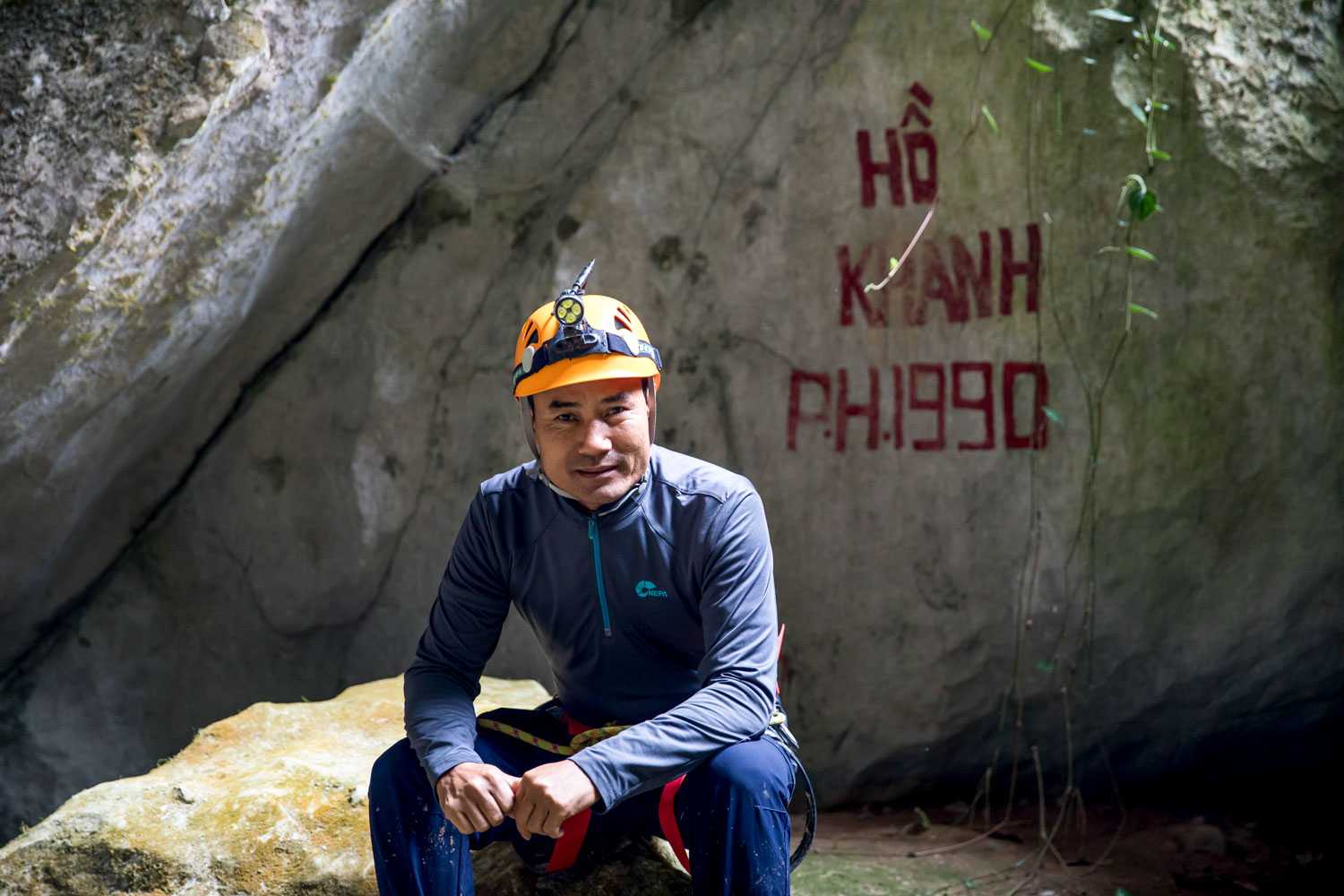
Son Doong Cave was first discovered in 1990 by Mr. Hồ Khanh, a local man from Quang Binh, when he accidentally stumbled upon its entrance while searching for agarwood in the forest. However, it wasn’t until 2009, under his guidance, that the joint British–Vietnamese expedition led by Howard Limbert officially surveyed and measured the cave. Shortly after, they announced to the world that this was indeed Son Doong – the largest cave on Earth.
So how did this detailed exploration unfold, and who gave the cave its official name? Let’s take a closer look.
Who discovered Son Doong Cave?
The first person to discover Son Doong Cave was Hồ Khanh, born in 1969 in Phong Nha village. Coming from a poor farming family, like many young men of his generation, he earned a living as a “phu tram” – an agarwood seeker, venturing deep into the jungle. Typically, he carried a backpack weighing dozens of kilograms filled with food and supplies to survive for days in the wilderness.
During these forest trips, Hồ Khanh developed a unique habit: he would look for and memorize the locations of caves. For him, caves were not only markers of potential agarwood areas but also sources of water – a vital necessity for survival in the forest.
The history of Son Doong’s discovery
In early December 1990, while searching for agarwood, Hồ Khanh was caught in heavy rain and sought shelter by a rocky cliff. There, he noticed a dark cave entrance, from which a freezing gust of wind and thick fog poured out. The eerie sight frightened him, and he quickly left, but the image haunted him for years.
During the 1980s and 1990s, life in Phong Nha was extremely difficult. People mainly relied on farming and agarwood hunting to survive. To most loggers, caves were nothing more than cold, lifeless rocks with no economic value. Still, that accidental discovery marked the beginning of a new chapter in cave exploration.
By 2007, when Howard Limbert, head of the British–Vietnamese Caving Expedition, traveled around villages asking about unusual caves, Hồ Khanh recounted what he had once seen. Howard immediately suspected it could be a massive cave and encouraged him to find the entrance again. Hồ Khanh searched tirelessly for months without success, until in 2008 he finally relocated the cave and carefully marked its position. He then sent a letter to Howard, who was in England at the time.
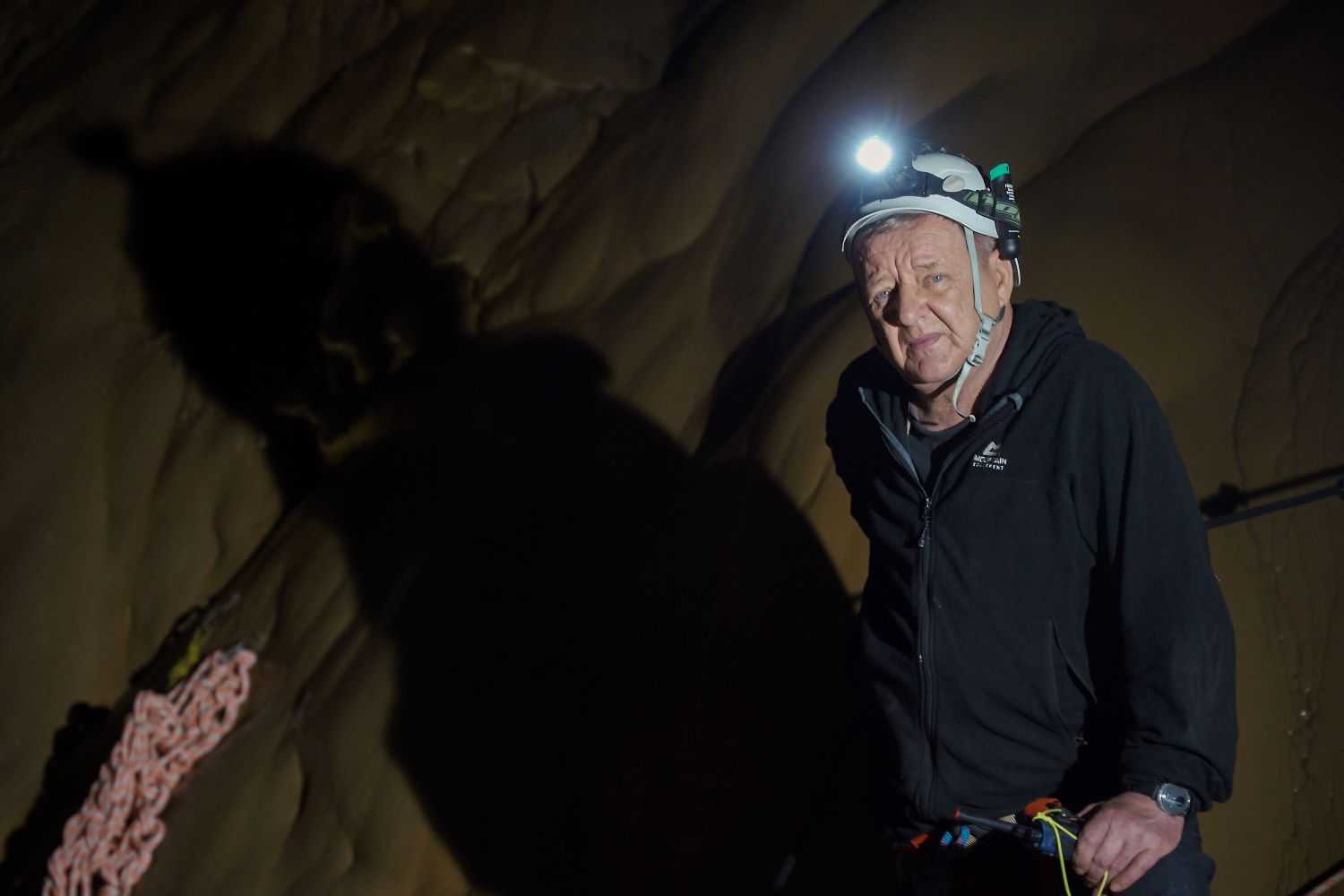
In March 2009, the British Royal Caving Team, together with scientists from Hanoi University of Science (Vietnam National University), conducted the official survey of Son Doong, guided by Hồ Khanh. On April 7, 2009, Peter MacNab, a member of the team, became the first person to set foot inside the cave. It was also Hồ Khanh’s very first time entering, as previously he lacked the equipment to descend the steep 50-meter drop at the entrance.
Laser measurements confirmed that Son Doong was the world’s largest natural cave. In April 2009, the British Royal Caving Association published their findings: surveyed length of 9 km, average height of 200 meters, and average width of 150 meters. From then on, Hồ Khanh’s name became inseparably linked with Son Doong. Read more at: Son Doong Cave exploration story
The meaning of the name “Son Doong”
After the entrance was rediscovered and the official survey conducted, the first question was: what should this colossal cave be called? As the original discoverer nearly twenty years earlier, Hồ Khanh was invited to name it. At first, he considered calling it after himself – “Khanh” – as a personal mark on the historic discovery. However, only a few days later, the expedition suggested changing it to reflect the local geography. Hồ Khanh agreed, and thus the name Son Doong was born.
The name carries both geographical and cultural meaning: “Son” means mountain, while “Doong” comes from Doong Valley, through which the Rao Thuong River flows and where the Bru Van Kieu ethnic community has lived since the early 1990s. Locals also call the area Ha Doong, and there is a small Doong village nearby. Therefore, “Son Doong” translates to “cave within the mountains with an underground river.” The name not only reflects the natural landscape but also the cultural ties of the local people.
It is worth noting that some international forums mistakenly refer to it as “Song Doom Cave,” but this is incorrect. The only official and recognized name on maps and in scientific publications is Son Doong Cave.

The significance of Son Doong Cave for tourism and science
– Scientific value: Son Doong is of immense importance for studies in geology, geomorphology, and climate science. Formed in limestone hundreds of millions of years old, the cave hosts a gigantic space and a unique ecosystem, complete with underground rivers, jungles, and its own microclimate. Scientists have documented hundreds of plant and animal species inside, including new discoveries – proof of the area’s extraordinary biodiversity.
– Tourism value: Son Doong is now considered the pinnacle of adventure tourism, with annual access limited to around 1,000 visitors to ensure conservation. The exploration experience is one-of-a-kind, putting Quang Binh firmly on the world tourism map. At the same time, the tours create jobs for locals and contribute to sustainable economic development.