


Son Doong Cave is not only famous for its massive size but also regarded as a “geological museum” filled with rare stalagmites and stalactites. These formations have taken millions of years to develop, created drop by drop as water dripping from the cave ceiling carried calcium carbonate that slowly accumulated and crystallized.
This patient process gave birth to stalactites hanging from the ceiling and stalagmites rising from the cave floor—both of which in Son Doong Cave have grown to sizes beyond imagination. Standing before them feels like stepping into another world, where time flows at a slower pace, carving out nature’s grand masterpieces.
Let’s explore some of the most spectacular and iconic formations inside Son Doong.
1. The “Hope and Vision” Stalagmite
Just after crossing the underground river, travelers arrive at the Hope and Vision passage, home to a colossal stalagmite nearly 80 meters tall. This breathtaking formation is considered one of Son Doong’s most iconic landmarks.
In 2009, the British–Vietnamese expedition team used laser measurement to confirm its incredible size. It may in fact hold the world record, surpassing the famous 70-meter stalagmite in Zhi Jin Cave, China. Standing at its base, you can’t help but feel tiny—like gazing up at a skyscraper built not by humans but by time itself.
2. Hand of Dog
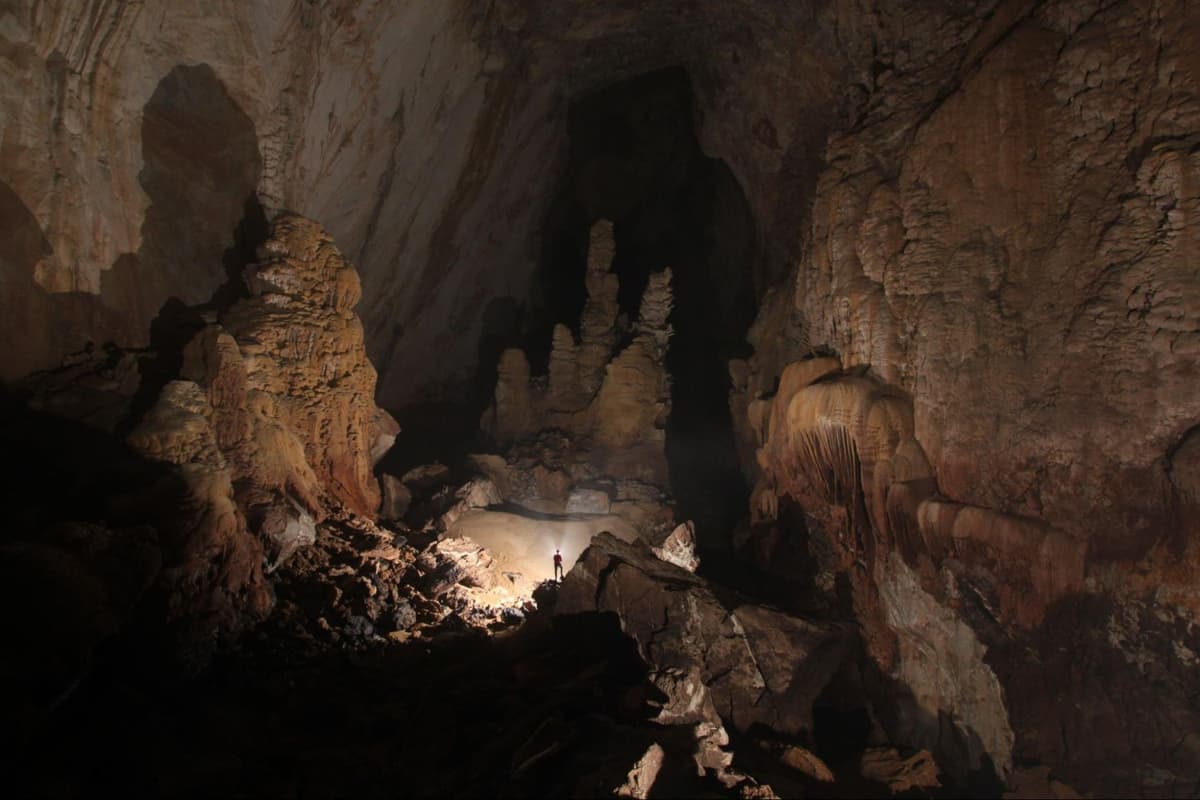
Continuing deeper into the cave, travelers encounter another giant stalagmite about 60 meters tall called Hand of Dog, located between the Hope and Vision passage and the first doline. Its quirky name, Hand of Dog, comes from a misheard moment during the 2009 survey, when an expert mistook “Hand of God” for “Hand of Dog.” The name stuck and was later marked on official maps.
From afar, this giant formation rises majestically from the cave floor, carrying within it the story of Son Doong’s early exploration days. It is a reminder that nature not only amazes us with sheer scale, but also binds itself to the memories and tales of the explorers who first set foot here.
3. The Great Wall of Vietnam
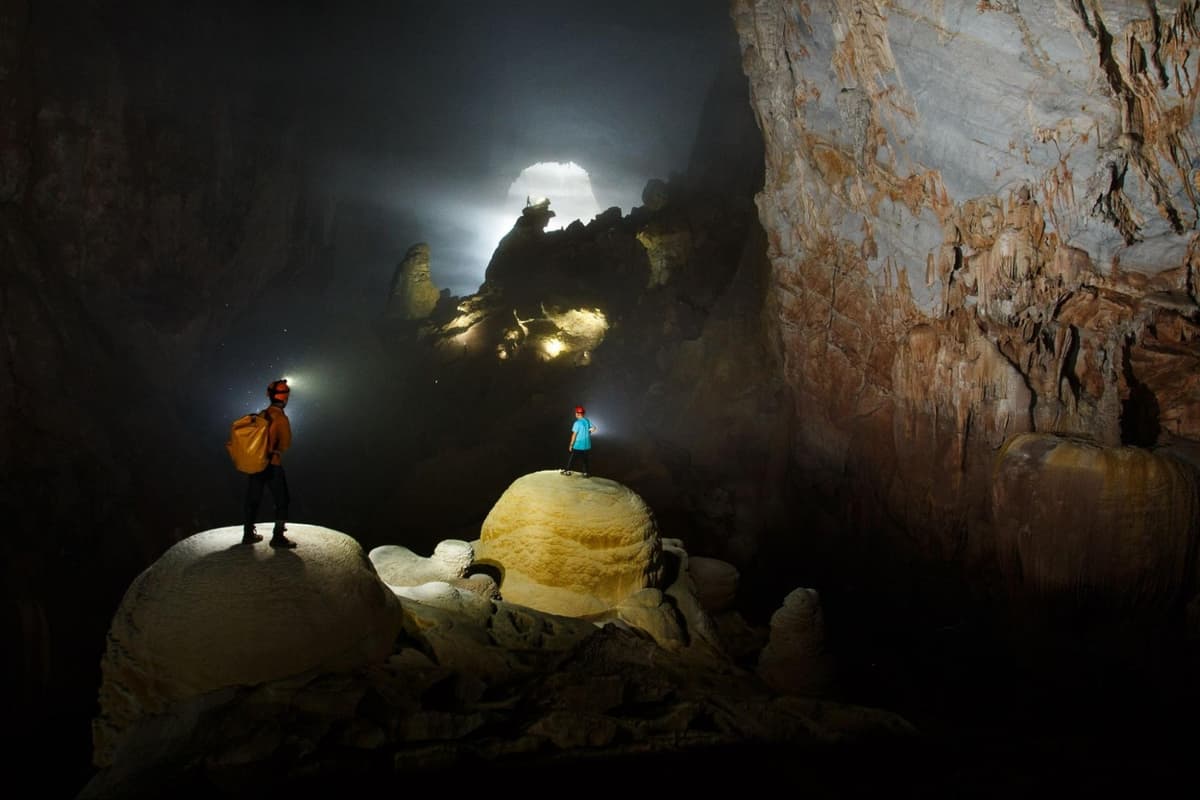
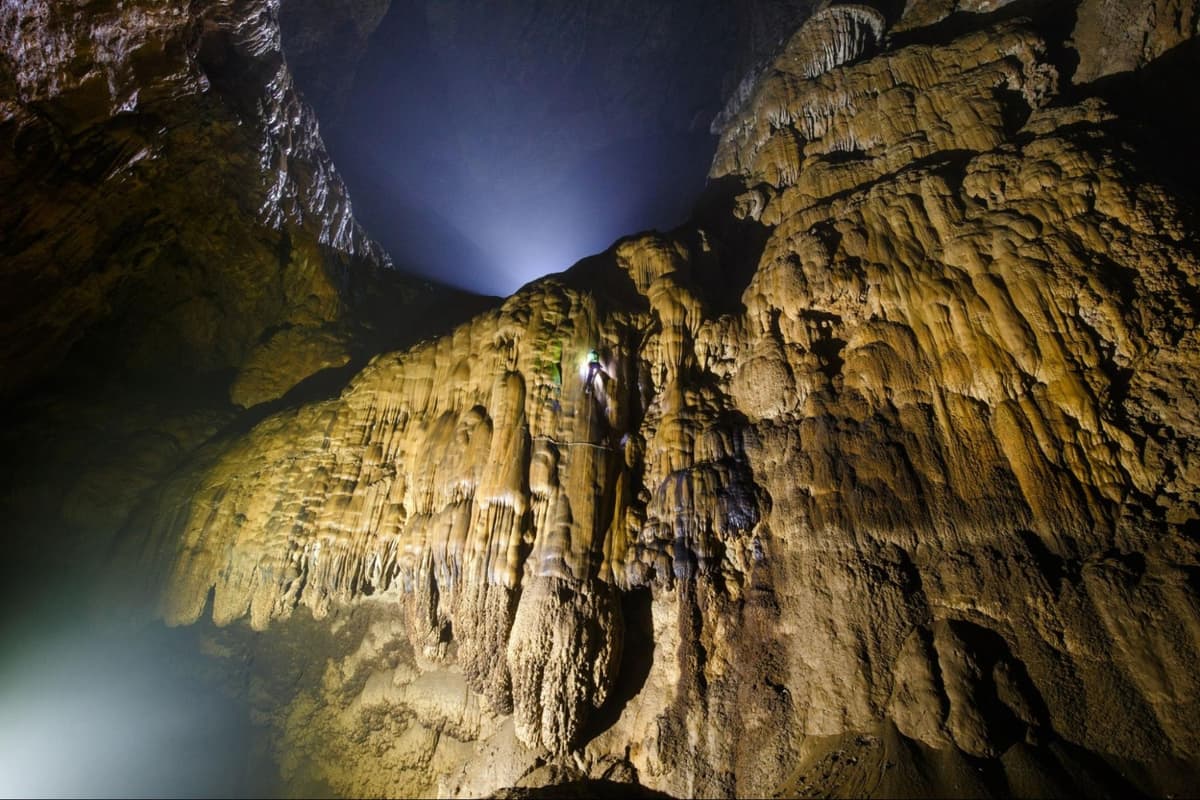
In April 2009, the expedition team stumbled upon a massive stone barrier blocking the path—so tall and imposing that it resembled a natural fortress. They named it The Great Wall of Vietnam in awe of its grandeur and seemingly unscalable presence. For months, this wall was considered an insurmountable obstacle.
Finally, in March 2010, with the help of specialized equipment, the team managed to conquer it. Standing at 90 meters tall—with a 25-meter vertical cliff and a 65-meter slope angled at 45 degrees—the Great Wall of Vietnam has since become one of the most significant milestones in Son Doong exploration.
4. The Wedding Cake Stalagmite
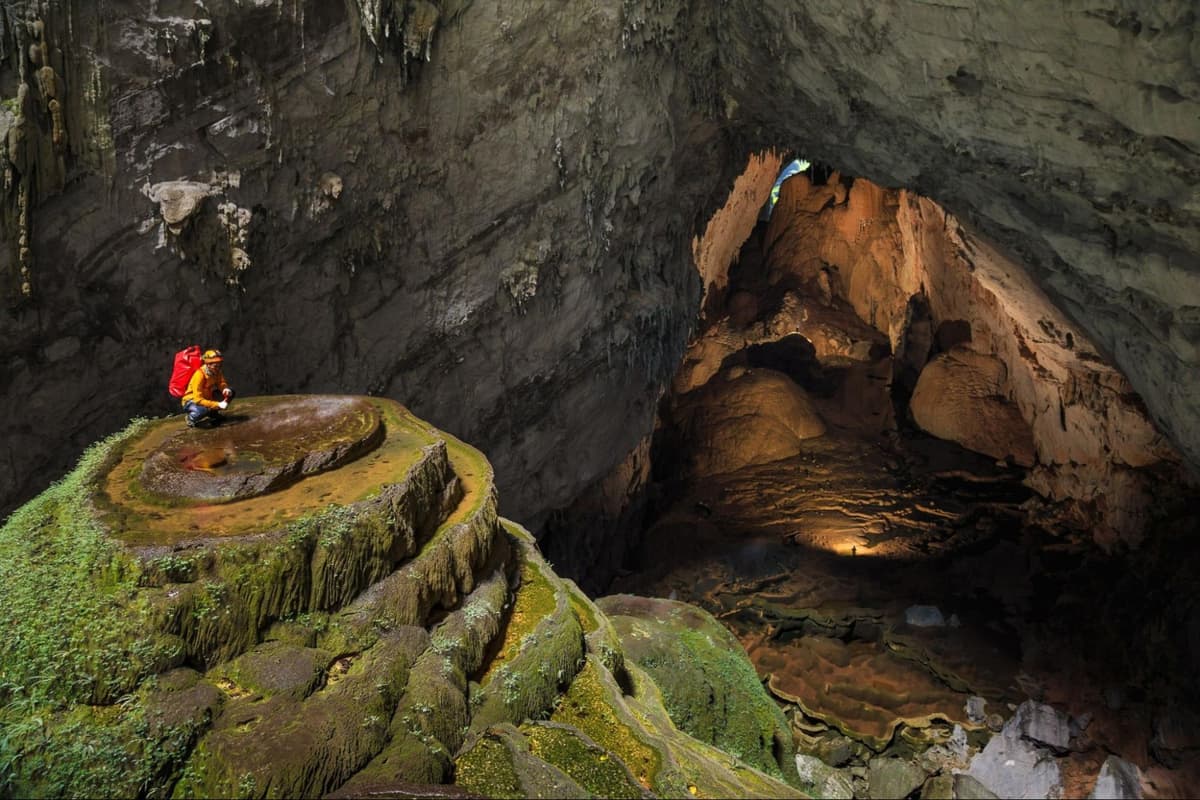
Beneath the first doline lies a huge, flat-topped stalagmite shaped like a multi-tiered wedding cake. Over centuries, cascading water smoothed its surface, giving it a refined look unlike the rough textures usually seen in stalagmites.
Its name, Wedding Cake, comes not only from its appearance but also from the fact that a traveler once proposed here, turning it into a romantic landmark amidst the cave’s grandeur. Today, it remains a favorite photography spot, and it even appeared in Alan Walker’s music video Alone, Part 2. Under the doline’s sunlight, this cake-like formation shines as one of Earth’s rarest natural marvels.
The Value of Stalagmites and Stalactites in Son Doong
The monumental formations inside Son Doong not only create breathtaking scenery but also carry immense scientific and tourism value. Their extraordinary size and unique shapes have made the cave one of the planet’s most extraordinary natural wonders. These timeless structures continue to attract researchers while inspiring photographers, nature lovers, and adventurers alike.
Son Doong’s landscapes are truly iconic. Sunbeams streaming through the first doline combine with mist to create dreamlike scenes found almost nowhere else on Earth. The silhouette of the Hand of Dog emerging in dim light has become an unforgettable image, frequently featured in National Geographic, ABC News, and international travel magazines.
Beyond science and photography, Son Doong poses a thrilling challenge for adventurers.
Trekking deep inside means crossing underground rivers, climbing slippery rock slopes, and camping underground for days—a true test of endurance that rewards visitors with unforgettable memories.
Preserving Nature Through Sustainable Tourism
Alongside its tourism value, Son Doong is strictly managed to ensure sustainability. Oxalis Adventure, the sole operator, places conservation above all, treating the protection of this fragile ecosystem as its foremost mission.
One key measure is minimizing human impact. Visitors are forbidden from touching stalagmites and stalactites, since even the lightest contact can alter their color or disrupt their growth. In sensitive areas such as the Green Gour near the first doline, travelers must follow designated pathways to safeguard rare mosses and vegetation.
Additionally, visitor numbers are tightly controlled. Only 1,000 travelers per year are allowed inside Son Doong, with each tour capped at 10 participants. This regulation eases environmental pressure, allowing the cave’s ecosystem to regenerate and maintain its delicate balance.
Thanks to these efforts, Son Doong’s pristine beauty is protected—not only as Vietnam’s pride today but also as a timeless wonder to be preserved for generations to come.