




The Great Wall of Vietnam is a colossal stalactite wall deep inside Son Doong Cave – the world’s largest cave, located in Phong Nha–Ke Bang National Park. In March 2010, an international expedition team successfully conquered this wall, opening a new exit for the cave. Equipped with specialized gear, it took them two days to climb the 90-meter barrier, which includes a 25-meter vertical section and a 65-meter slope at a 45-degree angle. This achievement not only completed the cave’s official survey but also cemented Son Doong as one of the planet’s most extraordinary natural wonders. This article takes you through the history, beauty, and significance of the Great Wall of Vietnam on the journey to conquer Son Doong Cave.
The journey to discover and conquer the Great Wall of Vietnam
During the first exploration in April 2009, after nearly five days inside the cave, the British Vietnam Caving Expedition Team encountered a massive flowstone wall completely blocking the passage. Without the proper climbing gear, they had no choice but to turn back. They brought with them measurements and photographs, which later formed part of the evidence used by National Geographic to confirm Son Doong as the largest cave in the world. The team named this imposing obstacle the “Great Wall of Vietnam,” a symbol of grandeur yet to be conquered, with the mystery of what lay beyond still unsolved.
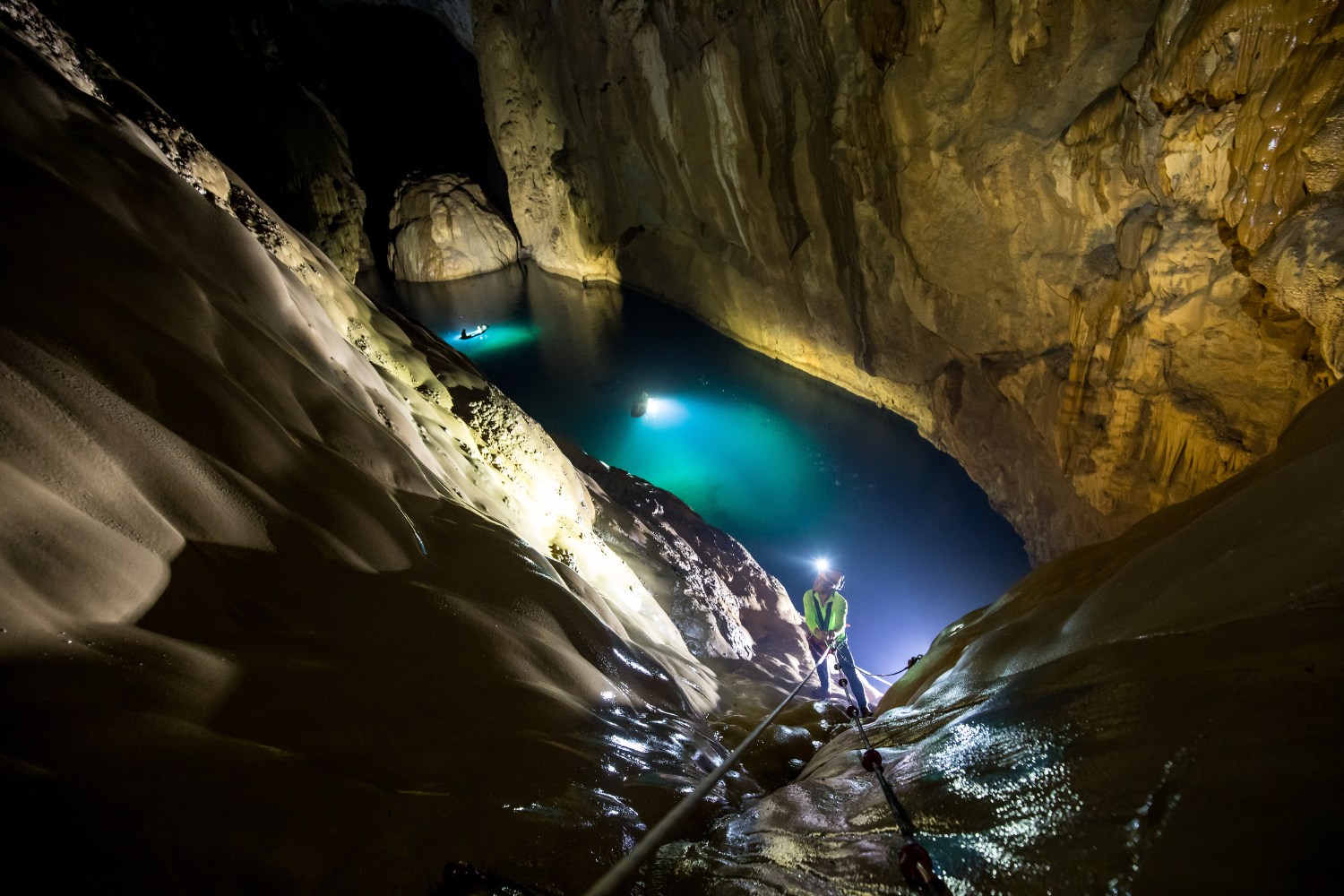
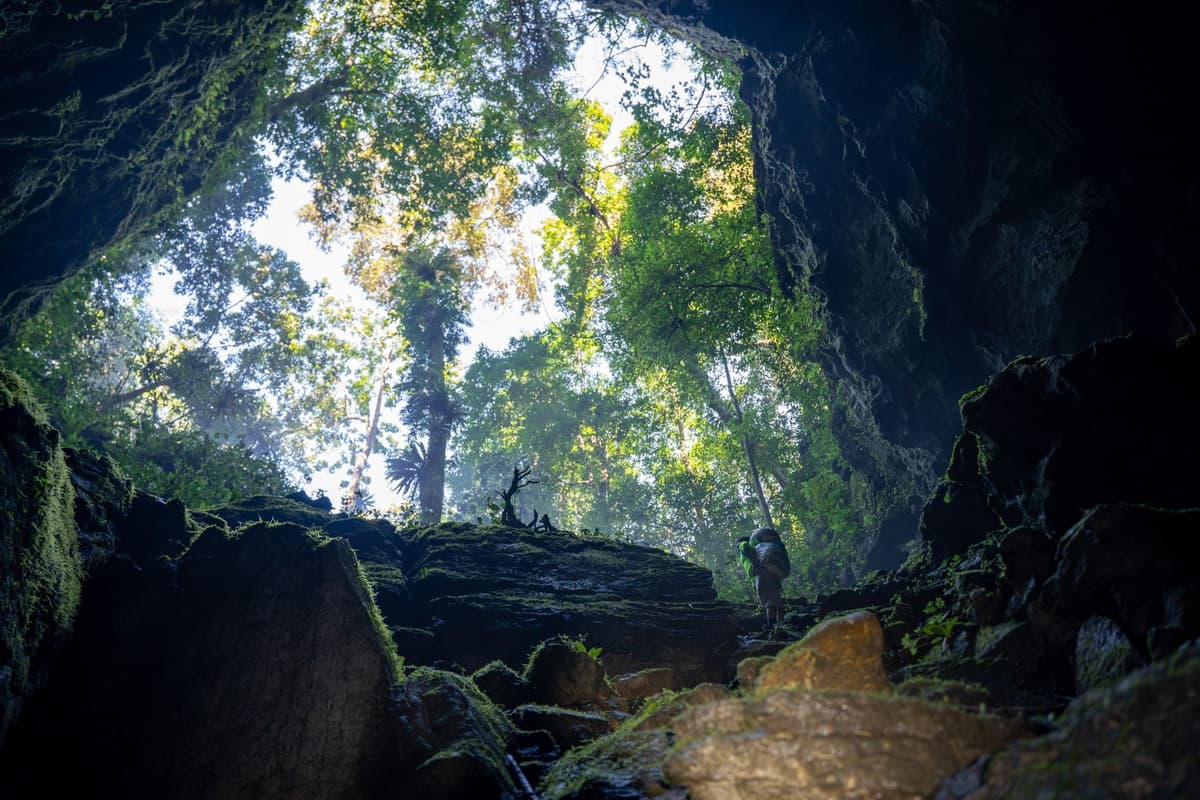
A year later, in March 2010, the team returned, this time with full climbing equipment and accompanied by a National Geographic TV crew. It took two full days to prepare the ropes, anchors, and other gear before tackling the 90-meter ascent. Cave experts Gareth Sewell and Howard Clarke became the first to scale the wall. On the other side, they discovered an enormous chamber lit by daylight in the distance – proof that this was indeed the cave’s exit. The survey revealed that the back entrance to Son Doong Cave was only about 500 meters beyond the wall.
The geological marvel of the Great Wall of Vietnam
The Great Wall of Vietnam is not only a geological wonder but also a testament to nature’s artistry over millions of years. Standing up to 90 meters high and stretching roughly 150 meters across, this colossal flowstone formation spans the chamber near Son Doong’s back entrance. It is considered the largest flowstone in the world, adorned with layers of stalactites, stalagmites, and pools of water.
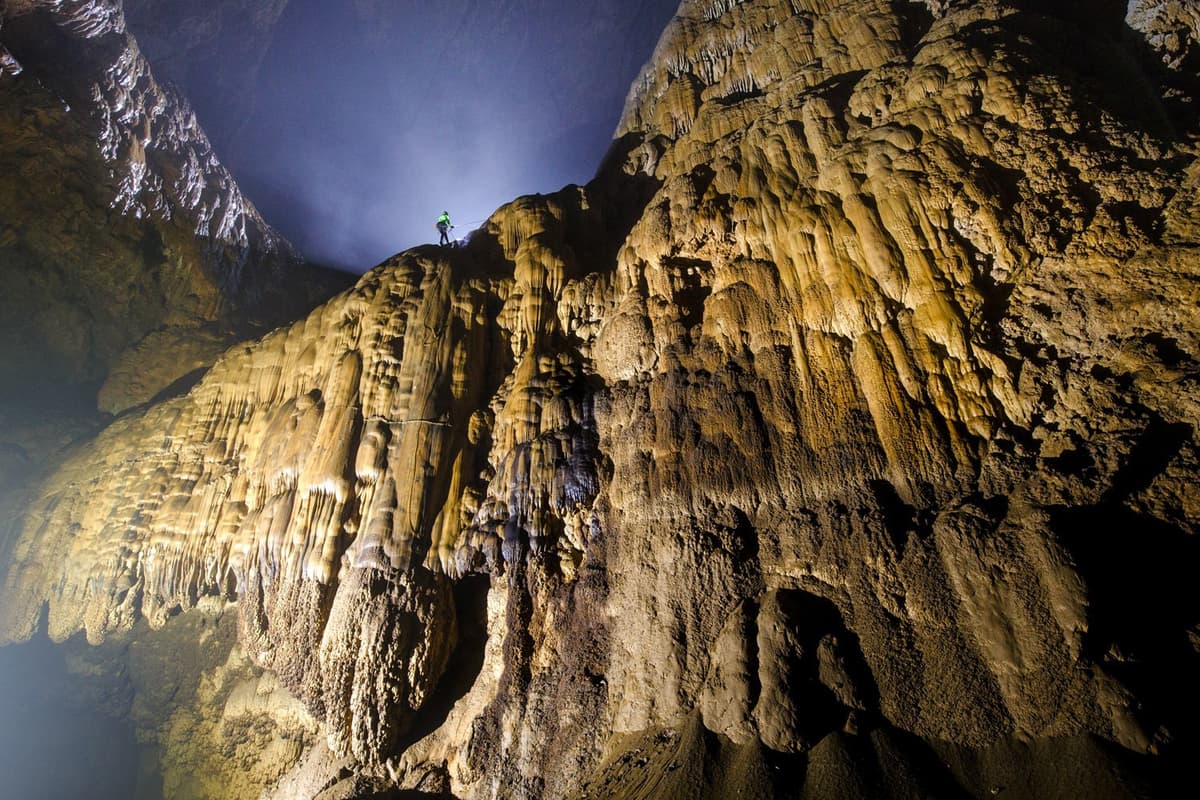
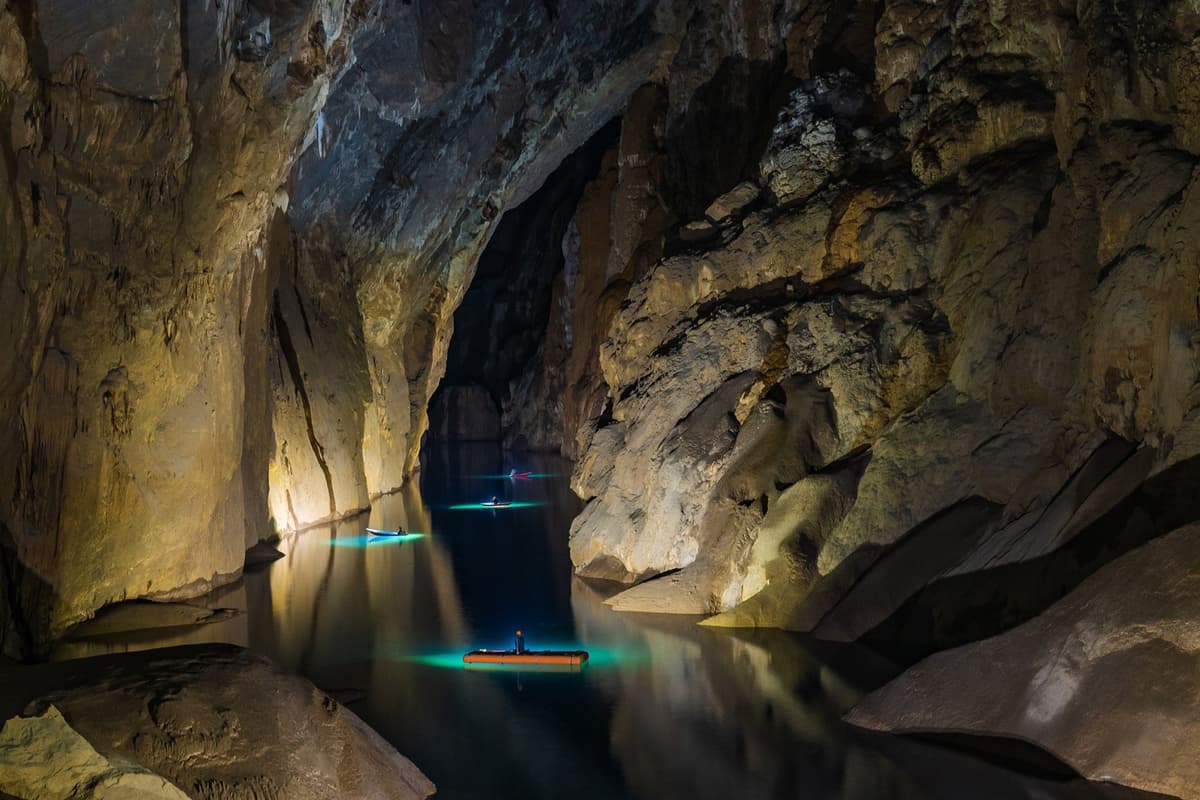
At its base, a seasonal pool sometimes rises up to 25 meters deep, creating stunning underground lakes. When the water recedes, it reveals a muddy passage with mud reaching waist height, making it a true challenge to cross. This section was named the Passchendaele Passage, after the grueling World War I battle, by the explorers.
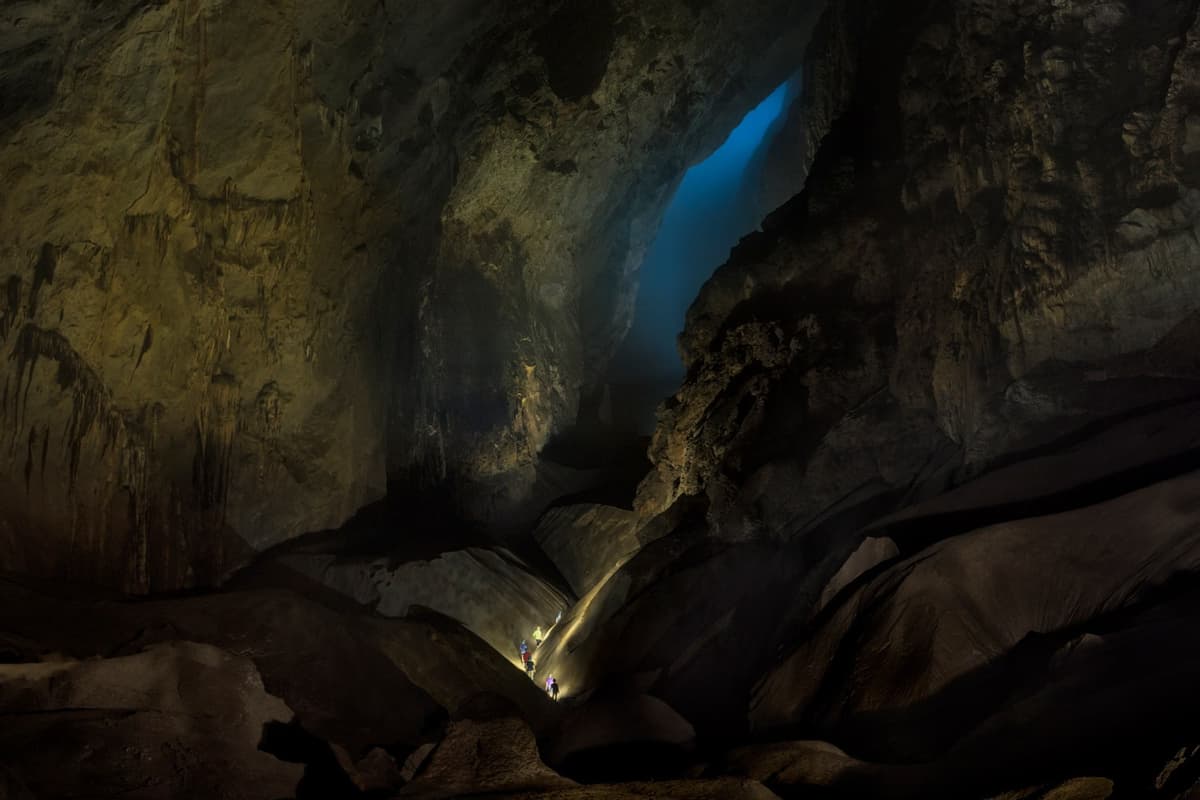
During the rainy months or when the pool is full, the scene transforms into a breathtaking sight: a 400-meter-long emerald stream winding through the cave, as beautiful as a natural painting. At this time, visitors can traverse the area by raft or boat, adding an unforgettable element to the Son Doong expedition.
Conquering the Great Wall of Vietnam on a Son Doong expedition
Climbing the Great Wall of Vietnam is one of the most thrilling challenges for adventure enthusiasts. Since Son Doong expeditions officially began in 2013, the tour has drawn adventurers from around the globe.
In 2017, authorities approved the installation of an 18-meter stainless steel ladder at the lowest vertical section of the wall, along with safety ropes for the final 65-meter slope. This upgrade allows visitors to scale the 90-meter wall without having to retrace their steps.
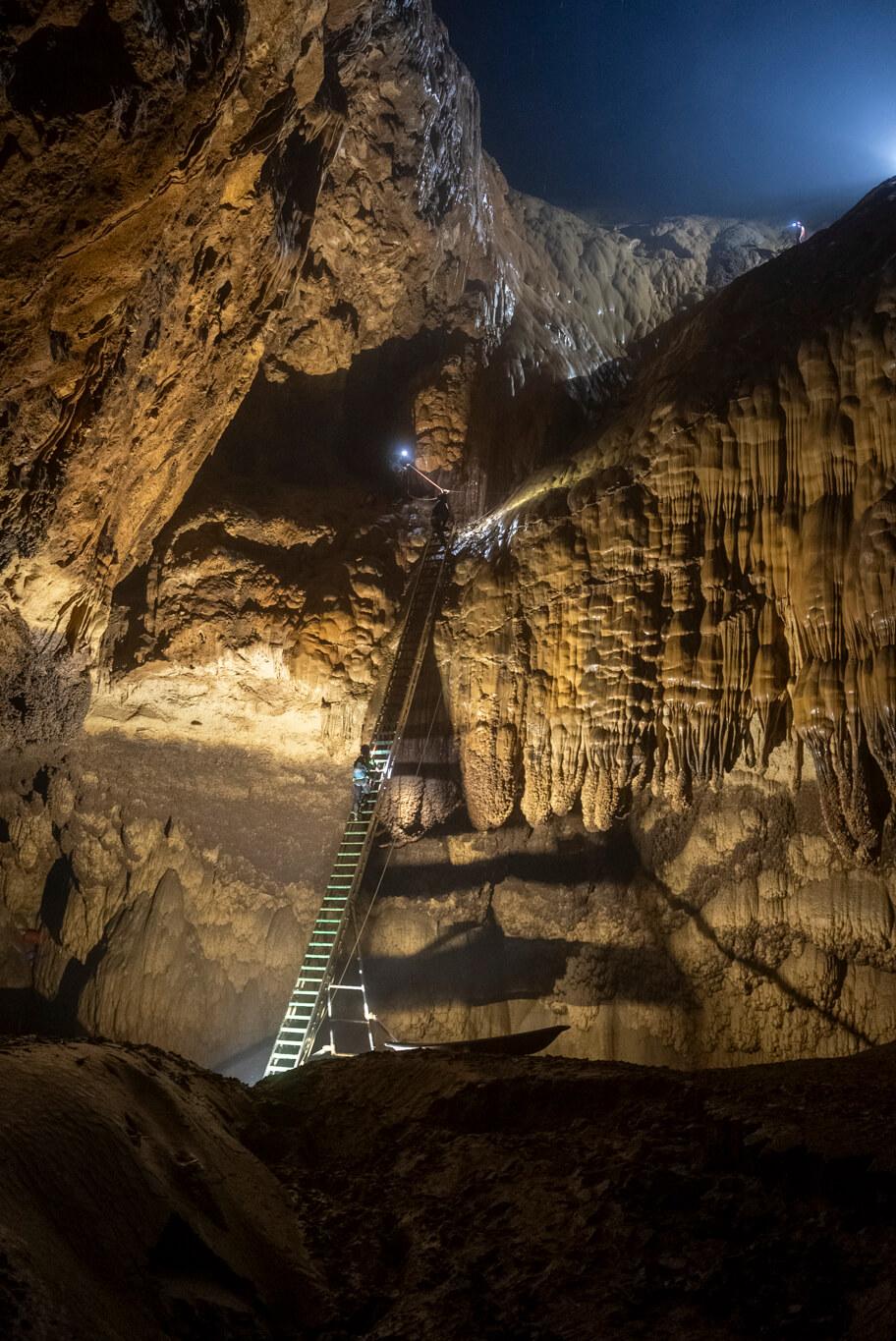
The climb is not easy. Most visitors have never used technical gear such as harnesses, carabiners, or pulleys before. The height can be intimidating, and a sense of unease is natural. Yet, under the guidance of Oxalis safety experts and assistants, everyone can complete the ascent safely. Many participants say that reaching the top of the wall is a moment of immense pride, as they push beyond their personal limits.
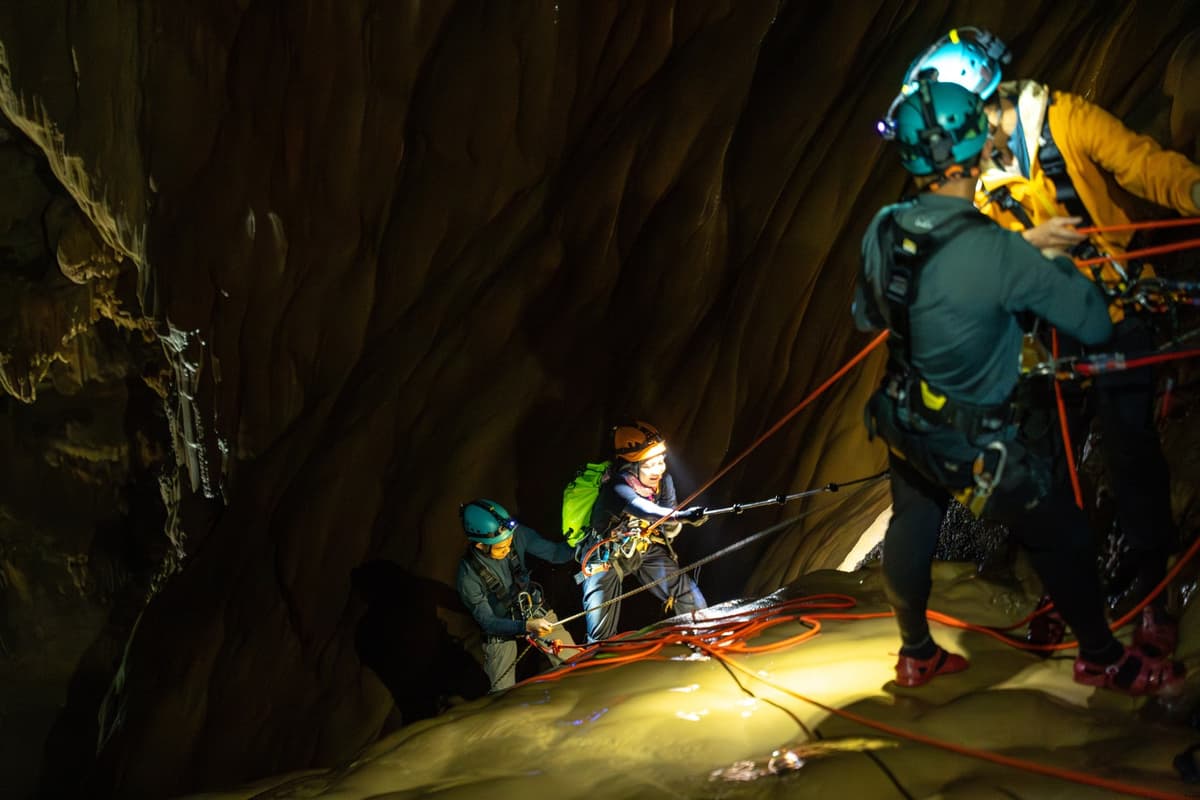
To reach the base of the wall, you’ll first cross an underground lake by boat. If water levels are low, you’ll trek through a muddy, slippery path. At the base, you’ll tackle an 18-meter vertical climb via the ladder with a safety belay system. From there, the adventure continues up a 70-meter rocky slope, using full climbing equipment, until you stand atop the Great Wall of Vietnam.
From the summit, it’s a 500-meter walk to the cave’s back entrance, followed by an ascent up rocky slopes to reach the Ho Chi Minh Highway — marking the end of one of the world’s most unique and spectacular cave journeys.