




Nestled among the forests of Phong Nha – Ke Bang National Park, Ban Doong Village is home to the Bru-Van Kieu ethnic community. Relatively isolated from settlements outside the forest, the village lies in a valley surrounded by limestone mountains, natural forests and streams. Reaching Ban Doong Village requires trekking through the forest, climbing steep slopes and crossing streams along trails rarely traveled by visitors.
Ban Doong Village is more than a stop along the expeditions to Hang En Cave and Son Doong Cave. It also tells the story of a community that has chosen to remain connected to this mountainous landscape, gradually adapting to isolated living conditions while experiencing changes in education, infrastructure and tourism. Learning about Ban Doong Village offers another perspective on Phong Nha – Ke Bang, where everyday life remains closely connected to the natural environment.
An introduction to Ban Doong village, a settlement deep in the forest
Ban Doong village is located in the core zone of Phong Nha – Ke Bang National Park, in Quang Tri Province, formerly part of Quang Binh Province. The village lies in Ban Doong Valley, surrounded by natural forests and limestone mountains. With no conventional road leading directly to the settlement, access is primarily via forest trails.
From the western branch of the Ho Chi Minh Road, the journey to Ban Doong village passes through the Ba Gian slope, forest trails and streams. The village is approximately 3 km from the main road. While this is a relatively short distance, the journey still requires visitors to navigate steep slopes, slippery paths and changing weather conditions.
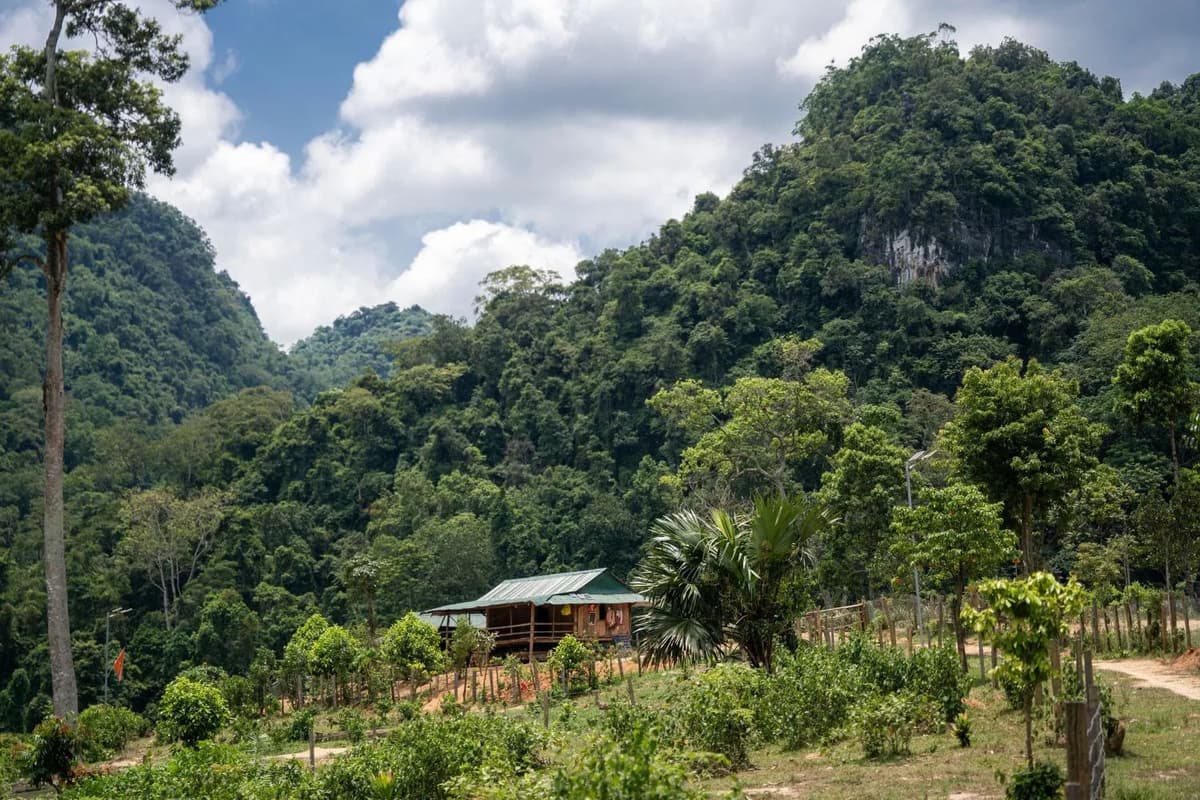
The village’s remote location has shaped many aspects of daily life, from transporting essential supplies to accessing schools and services outside the community. In the past, most travel relied on physical effort, while livelihoods depended largely on shifting cultivation and livestock farming. These limitations made life in Ban Doong village quite different from that of settlements closer to main roads.
However, Ban Doong village has never been entirely cut off from the outside world. Over time, improvements in access routes, water supply, education and communication have gradually changed living conditions. To better understand these changes, let’s look back at the community’s origins and the decision to remain in this remote forested landscape.
The Bru-Van Kieu community of Ban Doong village
Ban Doong village was established in 1992, when Nguyen Soai Trac, his wife Ho Thi Vai, and a group of Bru-Van Kieu people from Quang Ninh District, formerly part of Quang Binh Province, moved to the Hung Doong area in search of a new place to live. Their homes and crops in their previous settlement had been swept away by a major flood.
They chose a raised patch of land beside Rao Thuong Stream, in what is now Ban Doong valley. There, the group built homes, cleared land for cultivation and gradually established a stable community. Nguyen Soai Trac is recognized for his important role in founding the village and organizing the community during its early years.
Living in a geographically isolated area, the people of Ban Doong Village have long relied on the surrounding natural resources. They maintained agricultural activities to meet their daily needs and used stream water for everyday purposes. Traveling, transporting goods and accessing essential services were challenging because the village lies deep in the mountains, far from settlements outside the forest. These conditions gave daily life in Ban Doong village a rhythm quite different from that of lowland communities.
A turning point came in 2001, when Phong Nha – Ke Bang National Park was established and Ban Doong village became part of its strictly protected core zone. Local authorities encouraged and supported residents in relocating to the lowlands, where living conditions would be more convenient. However, the community chose to remain in the place where they had built their homes and established their lives.
Remaining in Ban Doong village meant adapting to limitations in transportation, infrastructure and everyday living conditions while complying with forest protection requirements. Residents continued agricultural activities within permitted boundaries and gradually adjusted to changes in conservation and management practices. Over the years, Ban Doong village has remained home to generations of Bru-Van Kieu people living within the core zone of Phong Nha – Ke Bang National Park.
The story of Ban Doong Village is therefore about more than finding a new home after a natural disaster. It also reflects how a community has adapted to geographical isolation and changing approaches to nature conservation and land management.
Ban Doong Village Today: Changes in Community Life
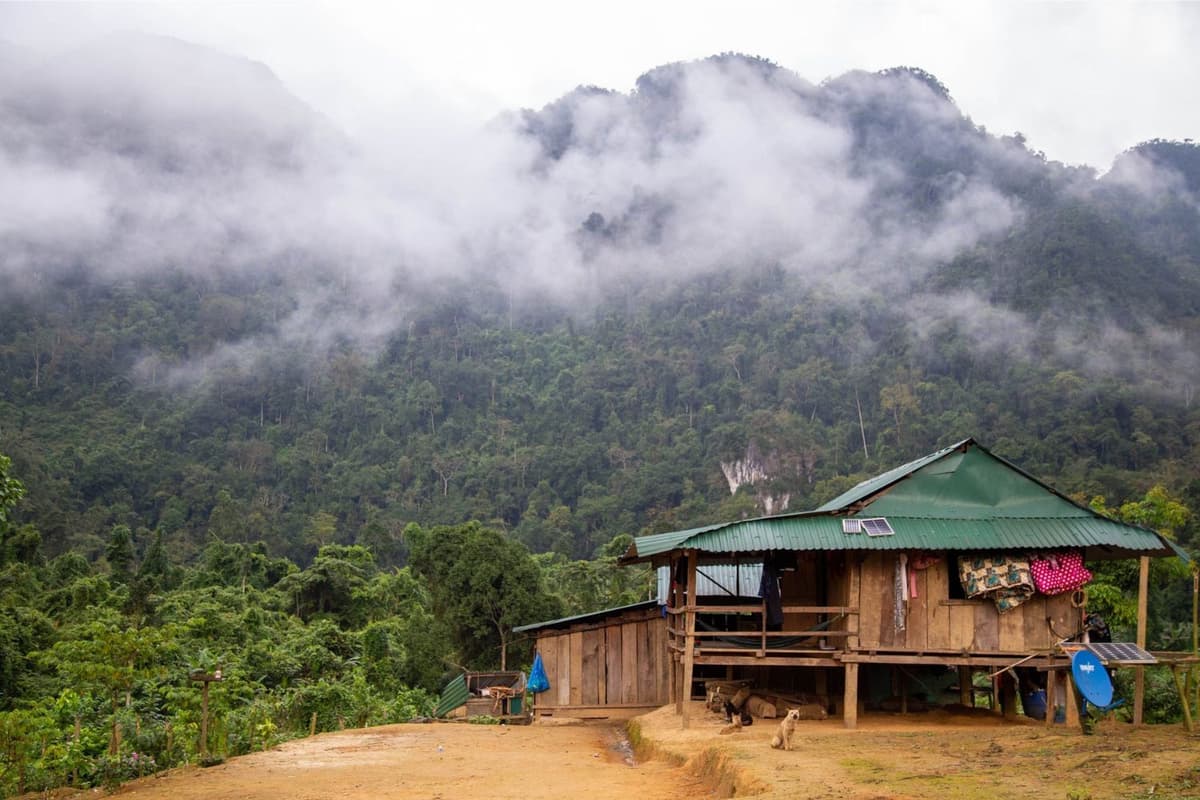
Residents of Ban Doong village primarily grow corn and peanuts, practice shifting cultivation, and raise livestock and poultry to meet their daily needs. Some agricultural produce is exchanged with traders for essential supplies, but transporting goods remains difficult, as residents must travel on foot along narrow forest trails.
Over time, living conditions have gradually improved. In 2007, the village’s first septic toilet system was built. By 2014, clean water from an upstream source was being piped into the village for residents to use. In 2021, a mobile network transmitter was installed, helping residents stay connected with the outside world. Households also use solar power to meet their daily electricity needs.
Education has seen notable improvements as well. The village school began operating in the 2008 – 2009 academic year, and Oxalis helped upgrade the building in 2015. As the school was severely damaged by flooding in 2020, with contributions from the Oxalis Foundation, along with support from organizations and individuals, a new school was completed in 2021. It serves both as a place for children to study and as an emergency shelter during storms and floods.
Beyond infrastructure development, the Oxalis Foundation has provided food during periods of seasonal shortage, disaster relief, medical assistance and scholarships for students. These initiatives have helped residents cope with challenges, particularly while travel and access to services outside the village remain limited.
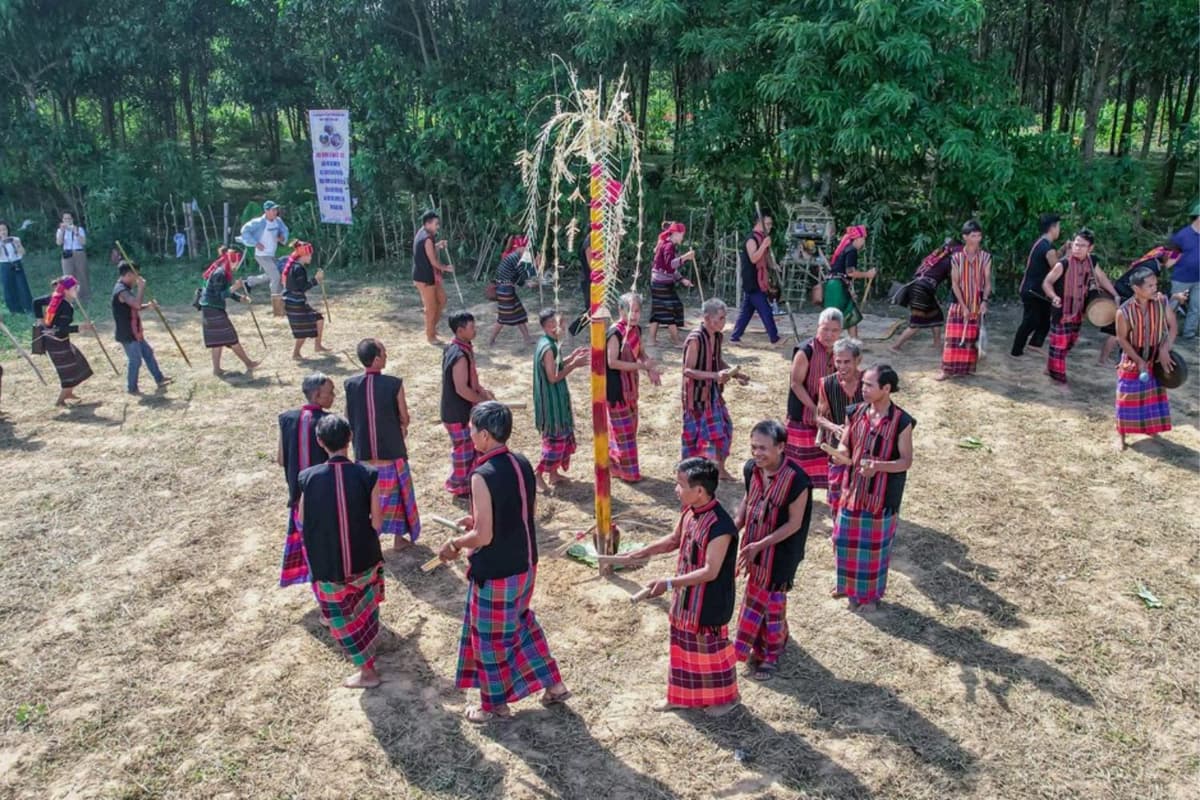
Despite living in the core zone of Phong Nha – Ke Bang National Park, residents of Ban Doong Village maintain connections with neighboring communities. During festivals, young people from the village may trek through the forest to nearby settlements along the border to meet and socialize with others. These relationships remain an important part of community life alongside farming and everyday activities.
Tourism has also created additional livelihood opportunities. During Oxalis Adventure expeditions to Hang En Cave and Son Doong Cave, Ban Doong Village serves as a stop where groups can rest and have meals. Some households help prepare food and provide resting places for visitors, generating additional income alongside farming and livestock raising.
However, Ban Doong village is first and foremost a place where people live. Visitors should respect residents’ privacy, ask permission before taking photographs, and avoid giving money or sweets directly to villagers without prior arrangement. Those wishing to support the community can speak with their guide or contact the Oxalis Foundation to learn about appropriate ways to contribute.
Improvements in infrastructure, education and livelihood opportunities are helping enhance living conditions in Ban Doong village, while the surrounding mountainous terrain and community relationships continue to shape daily life. Tourism can create additional opportunities for residents, but it should go hand in hand with respect for local life and the conservation of Phong Nha – Ke Bang National Park.
Exploring Ban Doong village on the Son Doong Cave Expedition
On Oxalis Adventure expeditions, Ban Doong village is one of the first stops before visitors venture deeper into the cave systems of Phong Nha – Ke Bang National Park. The route to the village takes the group through the forest, over the Ba Gian slope and across streams before opening onto the valley where the Bru-Van Kieu community lives. Amid an expedition focused on primary forests and vast cave systems, this stop offers an opportunity to learn about the local people, culture and way of life.
After resting and having lunch in Ban Doong village, the group continues to Hang En Cave. One of the notable caves in Phong Nha – Ke Bang, Hang En features three entrances, vast chambers and a campsite beside an underground lake. From Hang En, the Son Doong Cave Expedition continues through valleys, across steep limestone terrain and into the world’s largest known cave.
Son Doong Cave is remarkable for its immense chambers, underground river, enormous stalagmites and dolines that allow natural light to penetrate deep into the cave. In some areas, the combination of sunlight and humidity supports vegetation growing inside the cave, creating a landscape unlike the surrounding forest environment.
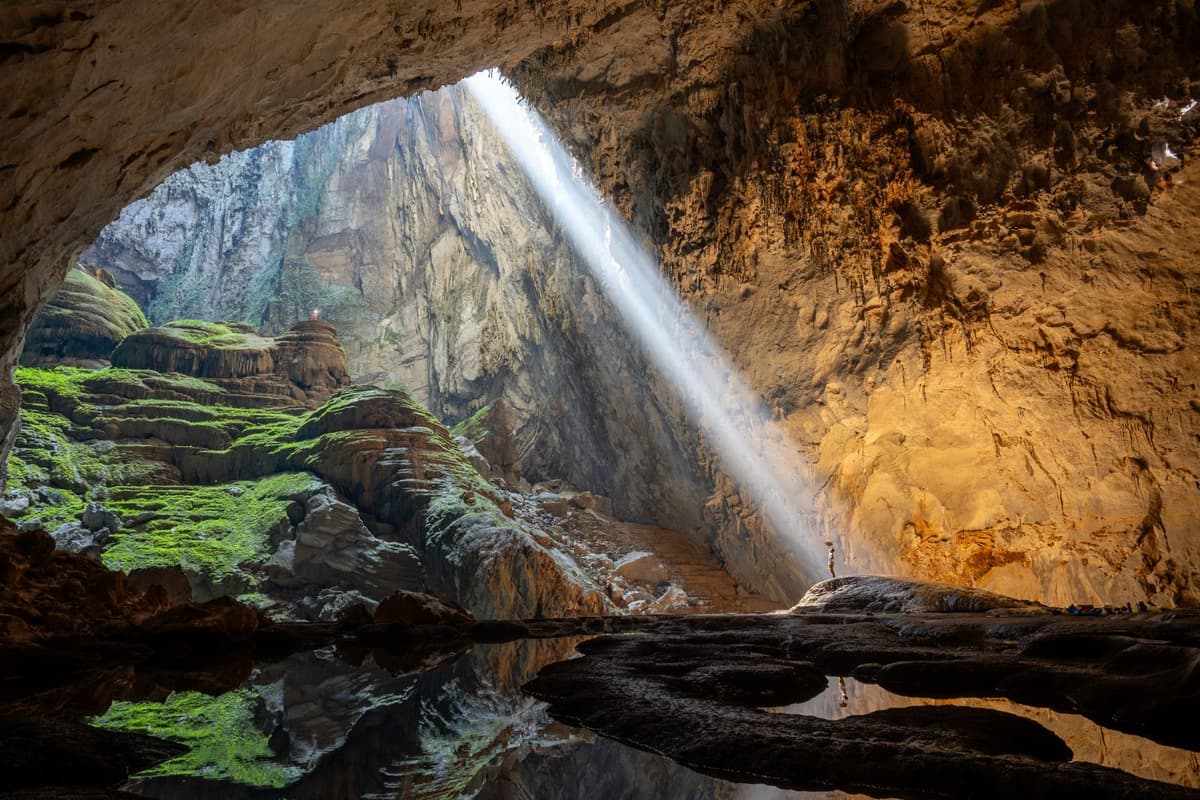
The Son Doong Cave Expedition combines forest trekking, stream crossings, steep climbs over rocky terrain and cave exploration. As the route includes steep sections and uneven surfaces, participants need to be physically fit, prepare all the equipment listed in the pre-trip information, and follow the instructions of guides and safety assistants throughout the expedition. Visitors should carefully review the itinerary and participation requirements before booking.
As part of the overall expedition, Ban Doong village is more than a stop on the way to Son Doong. It reveals another side of the core zone of Phong Nha – Ke Bang: alongside its forest ecosystems and extraordinary caves, the area is also home to a community sustaining its way of life within this natural landscape. Learning about the village’s origins, improvements in living conditions and tourism-related livelihood opportunities offers a broader perspective on the relationship between people and this remarkable place.