


The pristine and surreal beauty of Son Doong Cave has left visitors in awe and earned continuous recognition in leading travel magazines worldwide. The grandeur and mystery of the world’s largest cave have drawn renowned international photographers such as Ryan Deboodt (USA), Urs Zihlmann (Switzerland), Matthias Hauser, Daniel Kordan (Russia), and John Spies (Australia). They braved the rugged terrain to capture magical moments deep inside the cave. Each photograph reveals a rare glimpse into an untouched underground world, affirming Son Doong as a one-of-a-kind natural wonder.
Here are some of the most captivating spots inside Son Doong Cave – places that have become an endless source of inspiration for photographers and explorers alike.
1. Doline 1 – Watch Out For Dinosaur
Doline 1, also known as “Watch Out For Dinosaur,” is where the cave ceiling collapsed, opening up a vast chamber. Through these openings, sunlight pierces the darkness, creating a surreal scene of luminous beams cascading into the cavern like ribbons of light suspended in stillness.
This spectacle is especially prized by photographers, as the shafts of light only appear for a brief window, between 10:30 a.m. and 12:30 p.m., mainly during January and February. American photographer Ryan Deboodt was fortunate enough to capture these rare moments, producing dreamlike images. It was inside this colossal chamber that he truly felt the overwhelming power of nature.
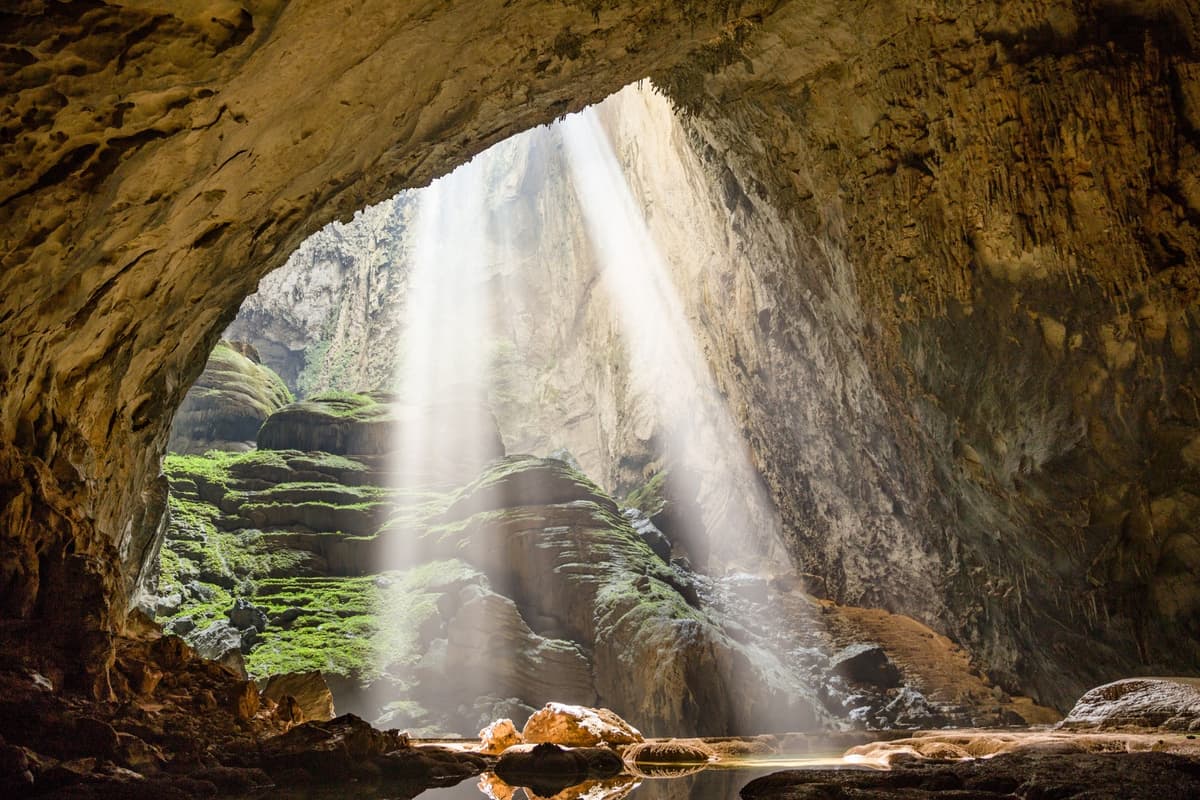
Not only Deboodt, but Australian photographer John Spies also documented the delicate rays filtering through the rocks. The pure light against the dense darkness made many visitors feel as though they had stepped into another world, where time seemed to stop and nature revealed its most enchanting face.
2. Hand of Dog
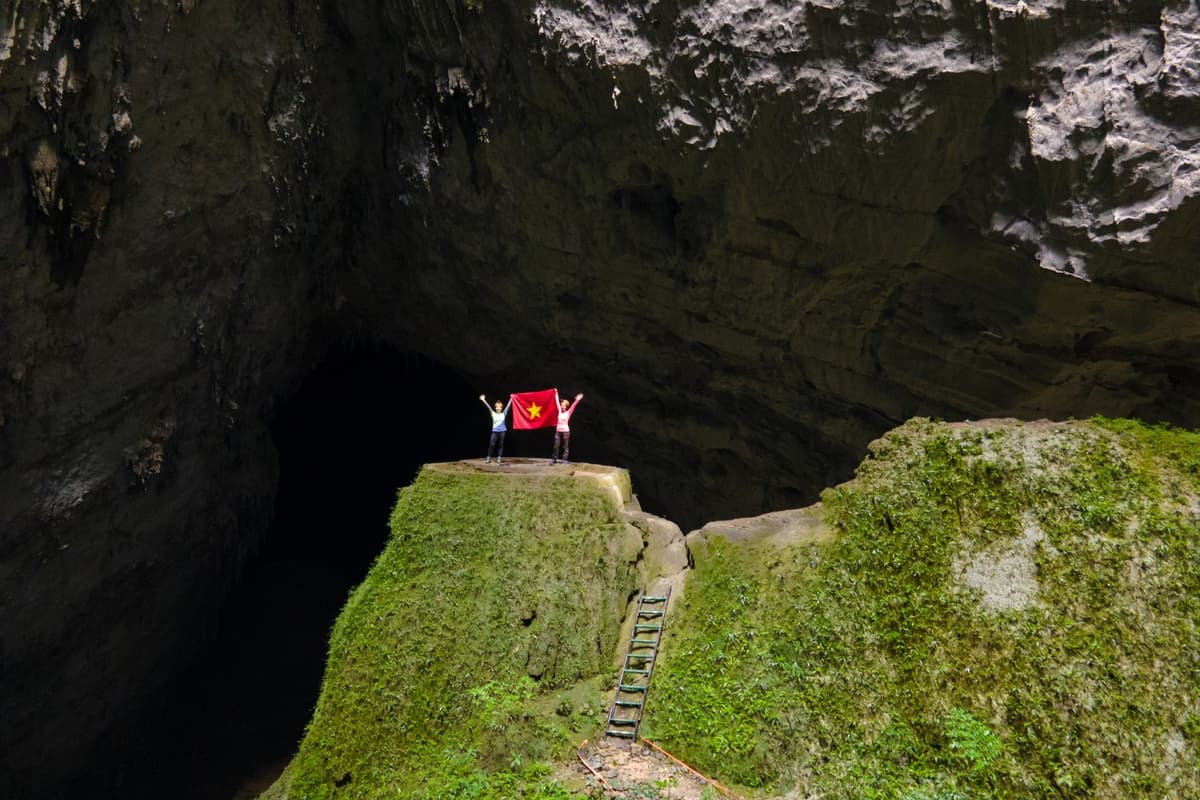
One of the most popular check-in spots in the Son Doong expedition is the massive stalagmite known as Hand of Dog. Rising nearly 60 meters tall, this giant formation stands proudly between the Hope and Vision sections and Doline 1, about two kilometers from the cave entrance. It looms in the darkness like an eternal symbol of time and nature.
What makes the Hand of Dog special is not only its striking shape but also the quirky story behind its name. In 2009, during the cave survey, expert Helen Brooke noticed the rock resembled a child’s hand reaching upward, like in a children’s movie, and suggested naming it Hand of God.
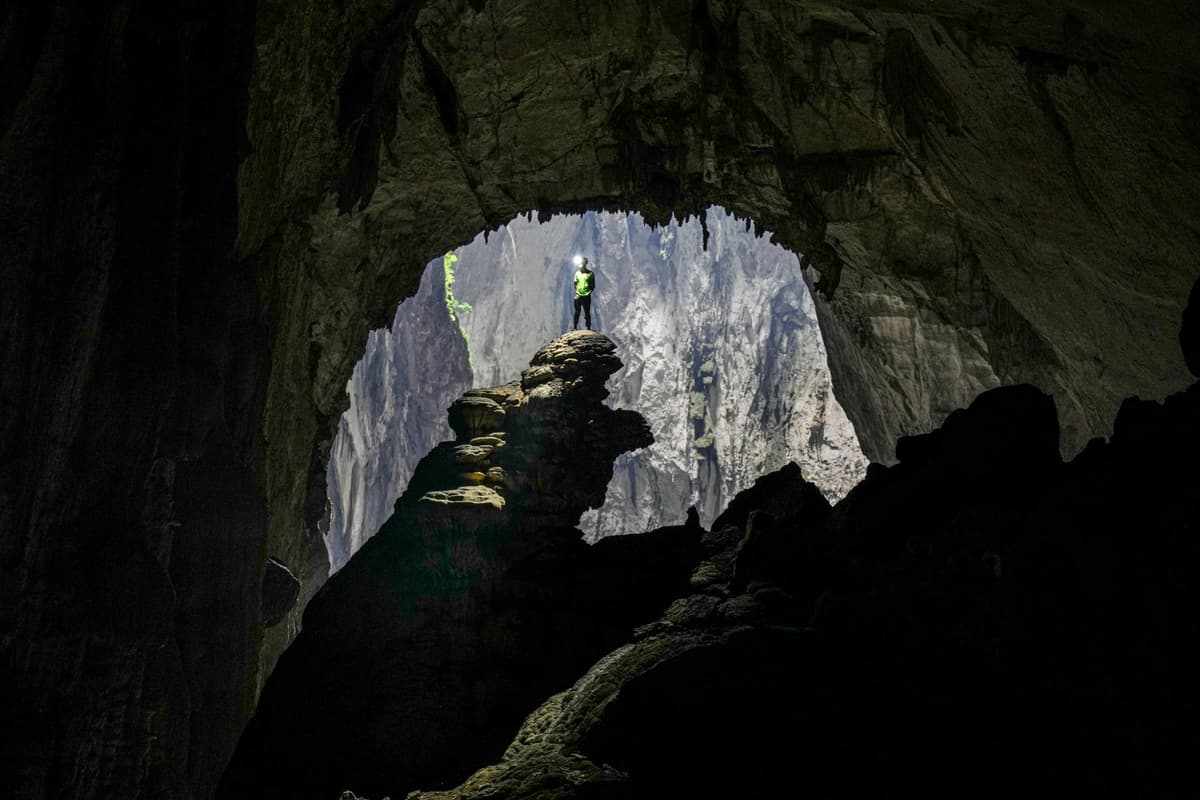
When sunlight streamed in from Doline 1, a kilometer away, the silhouette became even more dramatic. However, her colleague, Trevor Wailes, misheard it as “Hand of Dog” and recorded it that way on the survey map. Since then, the playful name has stuck and become part of Son Doong’s legend.
3. The Garden of Edam – A Unique Ecosystem Inside Son Doong Cave
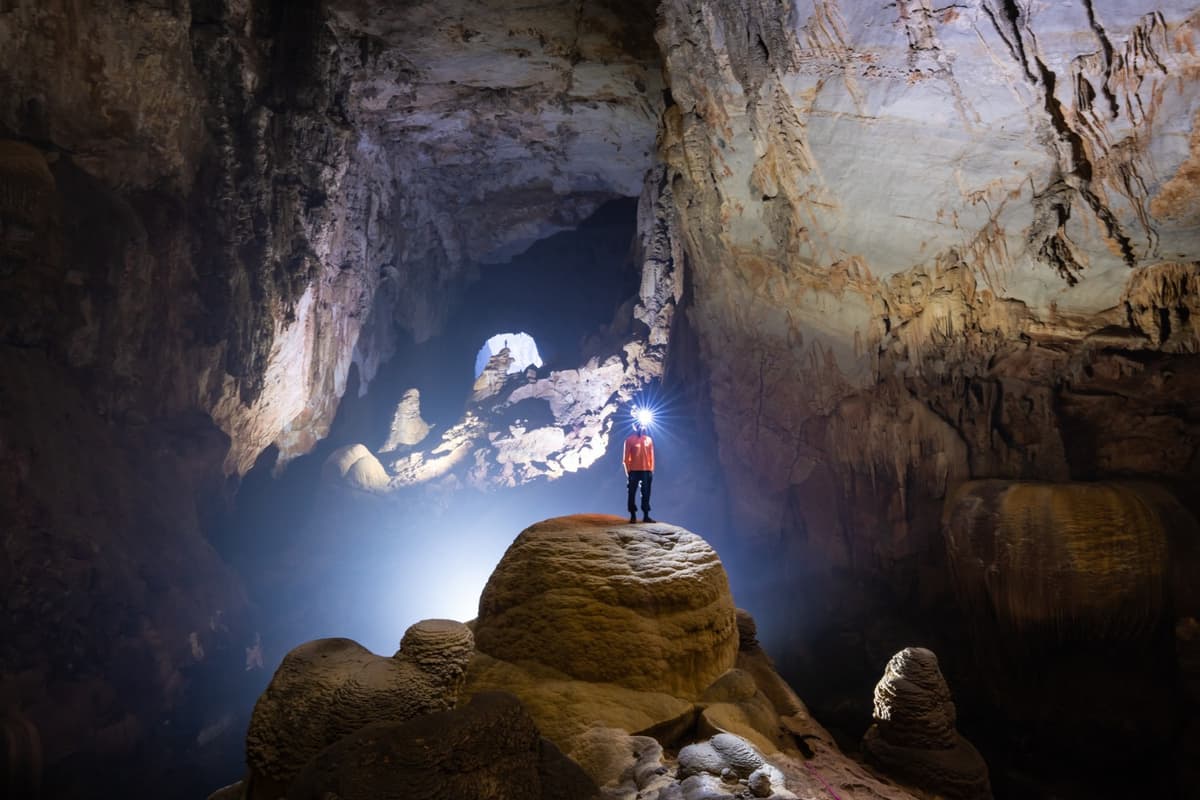
Beneath Doline 2 of Son Doong Cave lies an enormous underground forest, known as the “Garden of Edam.” Thanks to natural light streaming down from over 250 meters above, this surreal primeval forest has formed, where trees reach heights of 40–50 meters yet remain surprisingly slender. Mist drifting from the cave mouth wraps the entire area in an otherworldly, mysterious atmosphere.
This place once left explorers like Helen Brooke and Adam Spillane so astonished that they wanted to name it the “Garden of Eden.” However, to avoid religious confusion, they ultimately chose the name “Garden of Edam.” It has since become a magnet for world-class photographers.
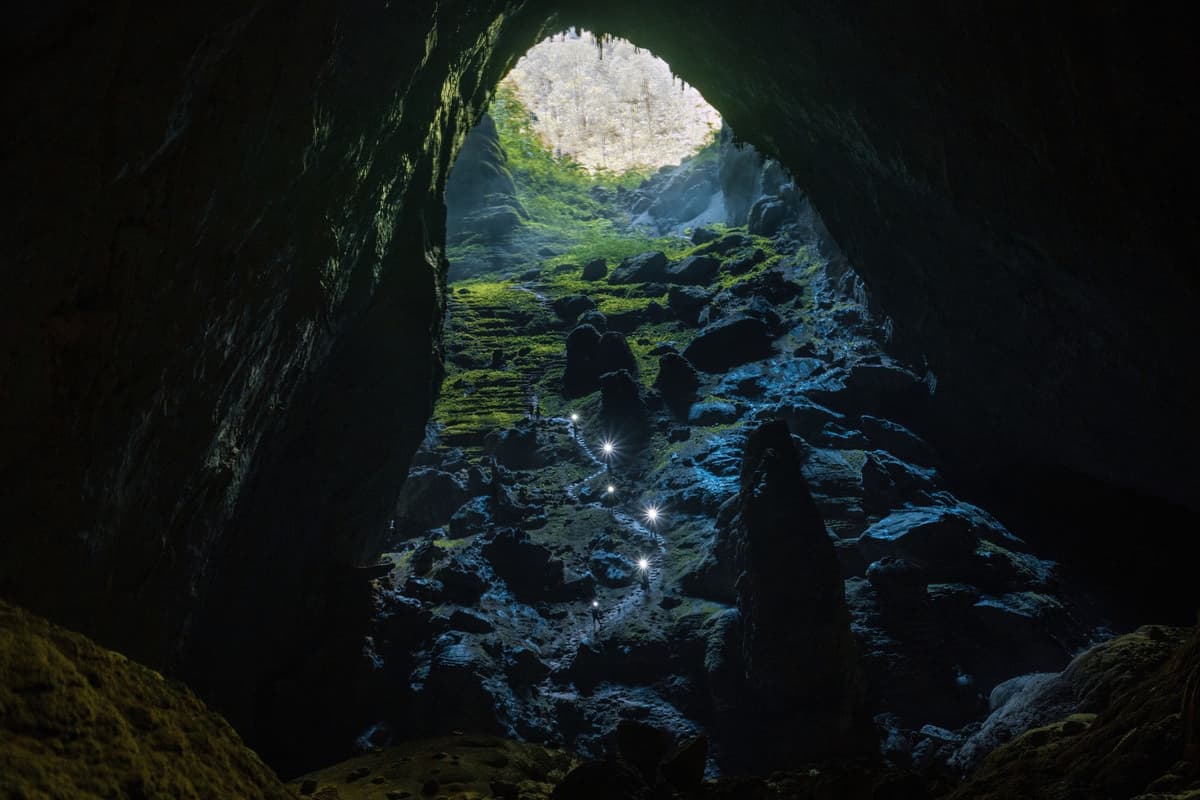
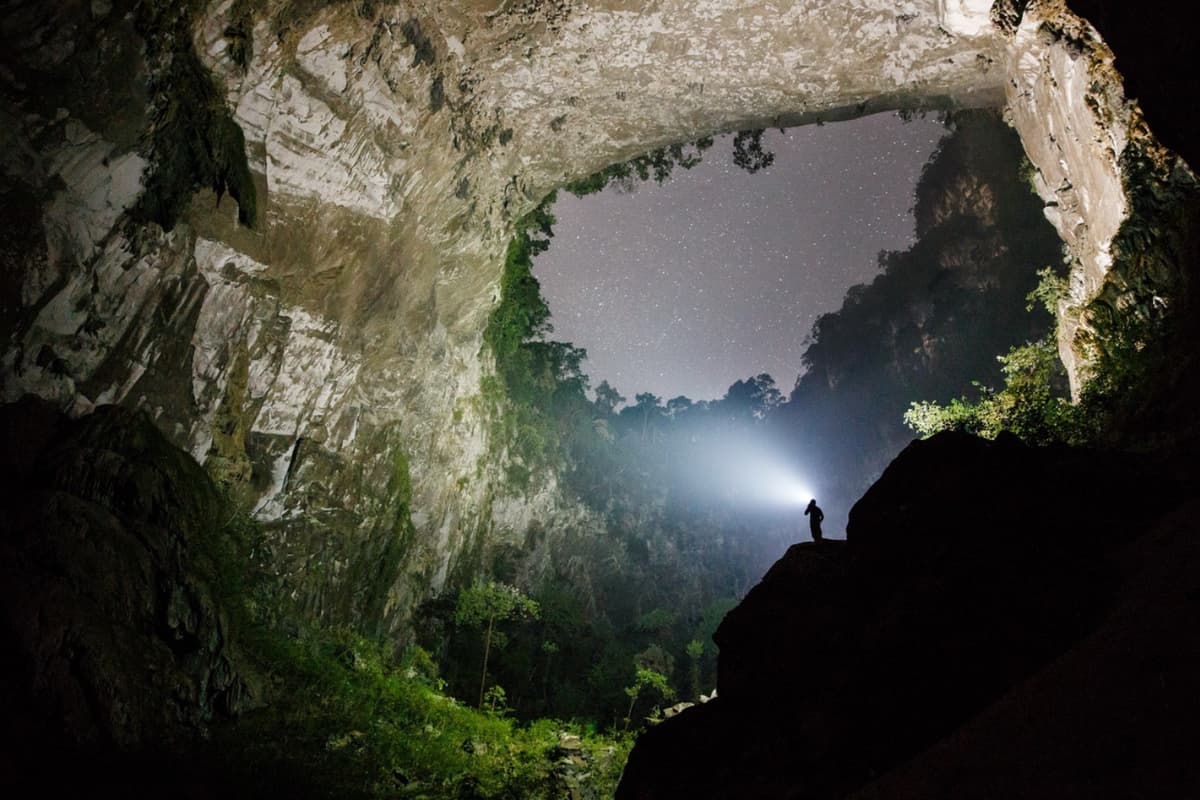
Ryan Deboodt captured the breathtaking starry skies above the “Garden of Edam” campsite, while Daniel Kordan was drawn to its untouched wilderness. His mesmerizing shots of dense forests lining water-filled dolines plunging 100 to 300 meters deep not only showcase Son Doong’s pristine beauty but also stand as living proof of its extraordinary and rare biodiversity.
4. The Underground River
Inside Son Doong Cave, researchers discovered an underground river stretching about 2.5 kilometers through the limestone mountain. In sections where the river flows, the cave vault expands to nearly 200 meters in height, creating a space as awe-inspiring as a giant ancient cathedral. Visitors usually traverse pathways along the cave walls, while far below, the river rushes at depths of 40–50 meters before plunging over a 40-meter waterfall at Doline 1 and vanishing into the darkness.
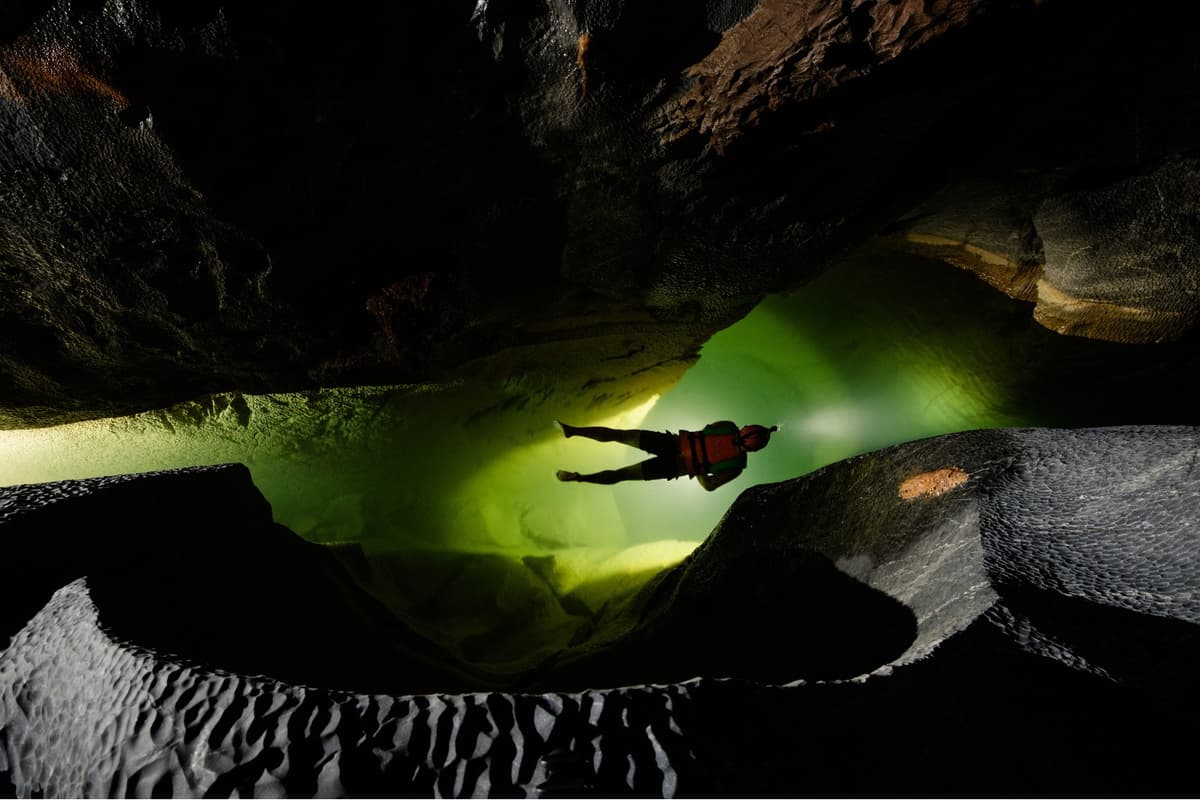
The scene is both majestic and mysterious, a true challenge for adventurous photographers. On his journey, Daniel Kordan captured the hidden river winding through layers of ancient sediment, revealing the cave’s timeless and enigmatic beauty.
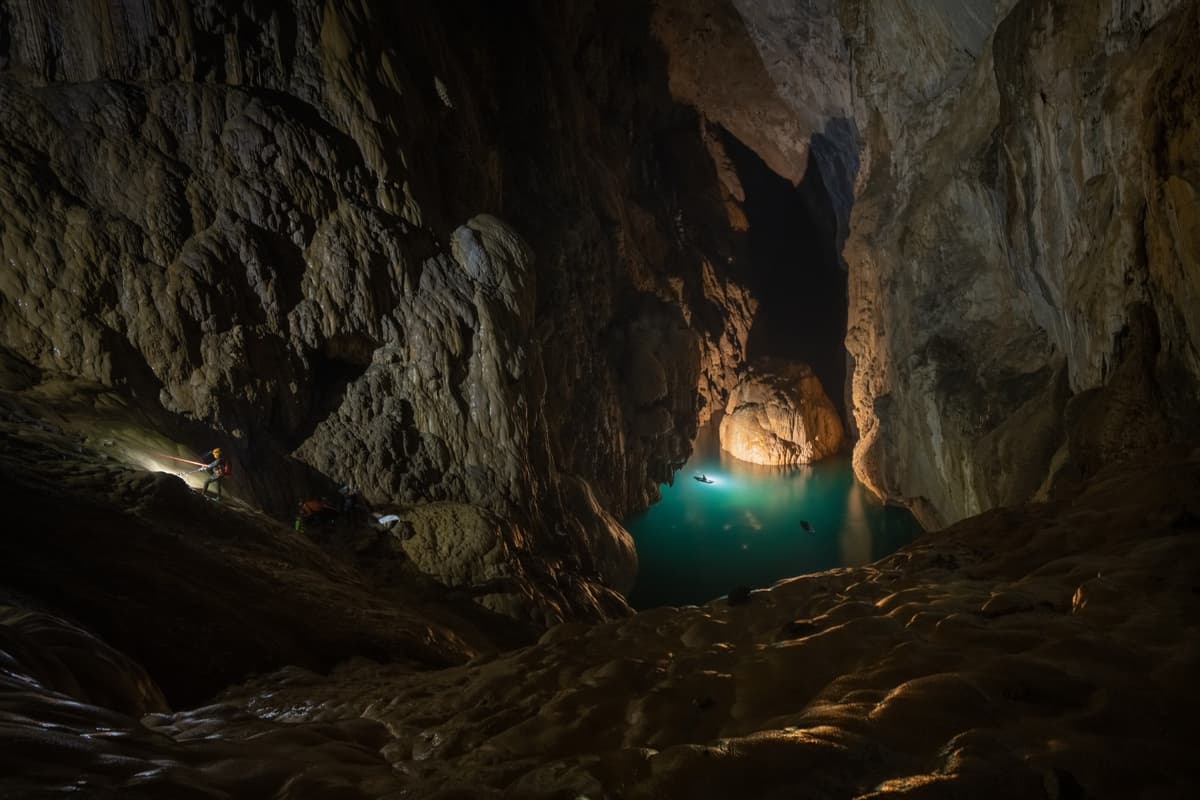
5. The “James Bond” Hole
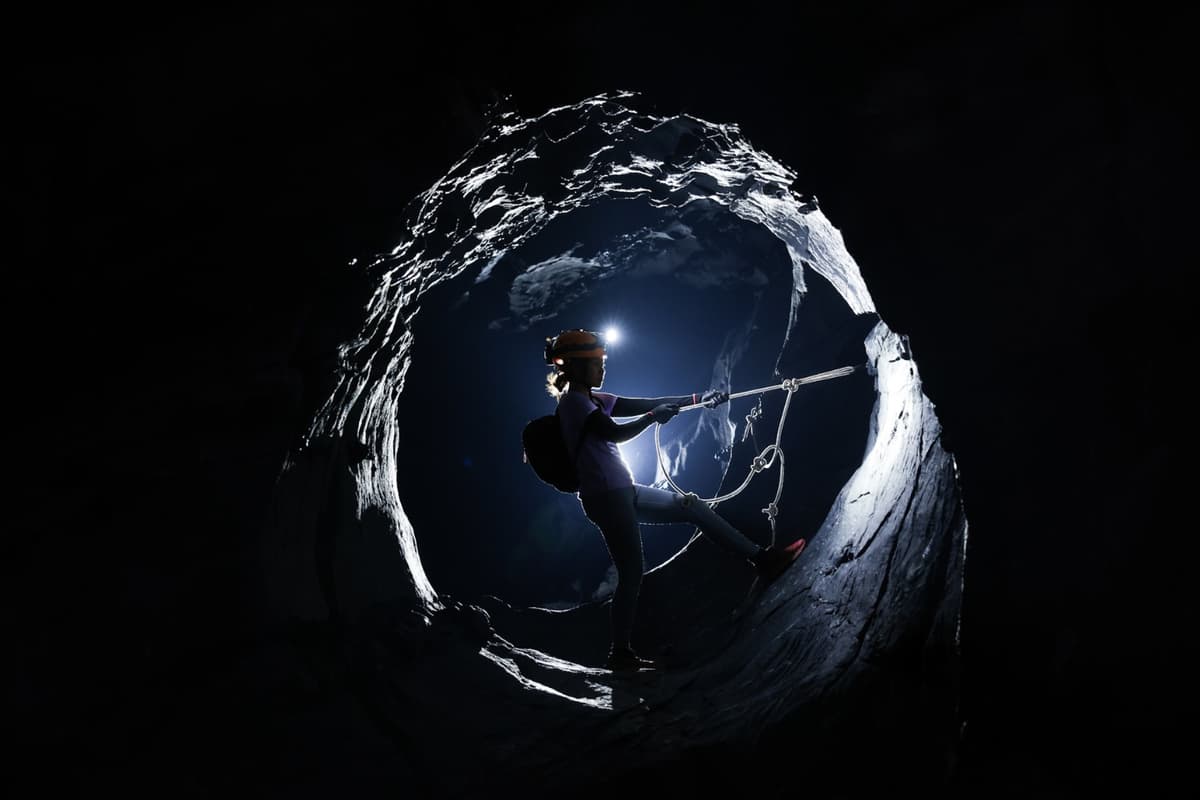
Hidden deep within Son Doong Cave lies a large circular chamber formed entirely by nature, commonly referred to as the “James Bond” hole. Its unique shape resembles the iconic opening frame from the legendary Hollywood spy films.
Beyond its mysterious allure, this spot has become a popular destination for visitors to check in. Many pose as if they were secret agents, drawing a gun, creating playful and striking photos. Photographer Ryan Deboodt also captured a memorable shot here, adding a cinematic touch to Son Doong’s breathtaking landscapes.
6. The Great Wall of Vietnam
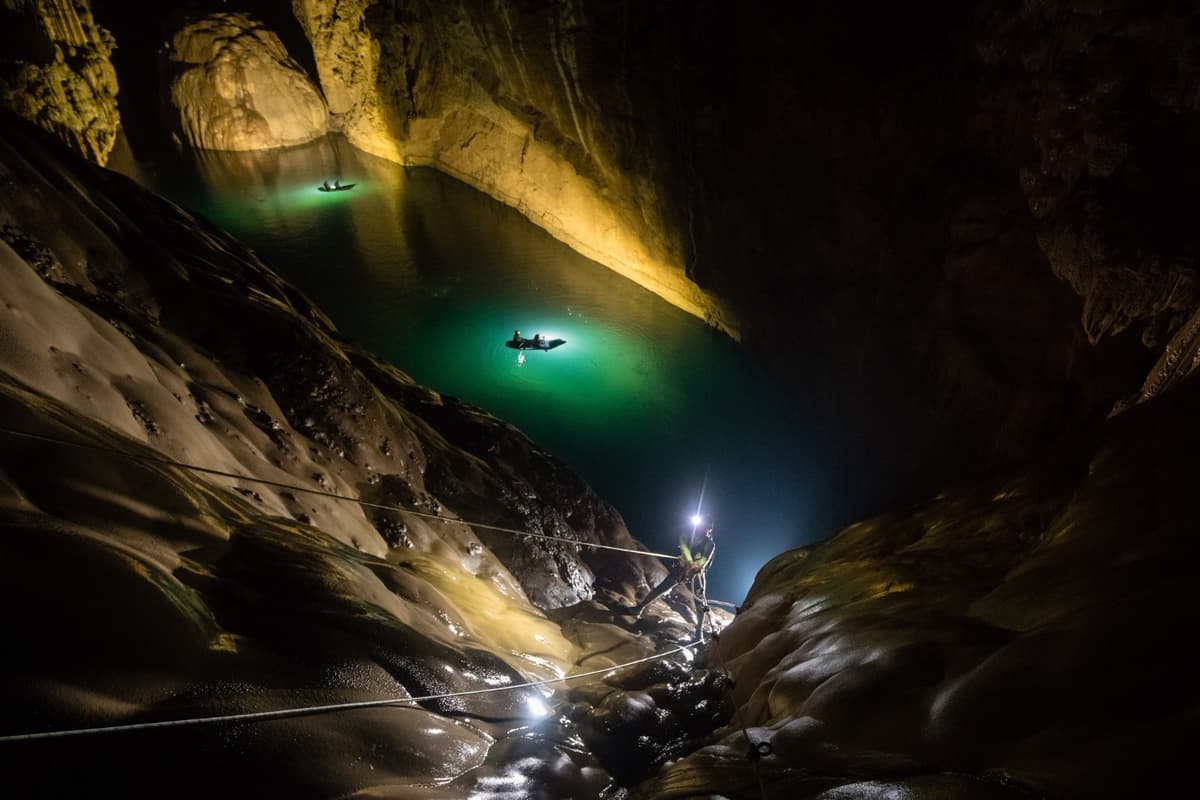
One of the most breathtaking check-in spots inside Son Doong Cave is the Great Wall of Vietnam – a colossal rock formation rising nearly 90 meters high, located about 500 meters from the cave entrance. Often called the “final gateway” of the Son Doong expedition, it challenges explorers to conquer it before they can complete the journey, or else face a tough 6-kilometer retreat.
This wall has long been a formidable obstacle due to its difficulty. Its slick and jagged surface, often coated in moisture, turns climbing into a true test of endurance. Thanks to its sheer magnificence, the Great Wall of Vietnam has inspired many photographers. Ryan Deboodt was the first to capture its overwhelming scale, while Jason Speth brought its adventurous atmosphere to life through striking images.
Today, for safety, the Great Wall of Vietnam has been outfitted with an 18-meter stainless steel ladder on the vertical section and fixed ropes across a 65-meter slope. These additions make it safer for visitors to take on this daunting yet immensely rewarding challenge.
Important Notes Before Your Son Doong Cave
A journey into Son Doong Cave is not only an underground adventure but also a once-in-a-lifetime opportunity to witness a rare natural wonder. To ensure both safety and the preservation of this pristine ecosystem, visitors must strictly follow these rules:
- Be physically prepared and get a health check before the trip: The expedition lasts 4 days and 3 nights, with a high level of difficulty, including climbing, stream crossings, and swimming through underground rivers. Endurance and perseverance are essential.
- Always follow the guidance of experts and porters: They are highly knowledgeable about the terrain, weather, and safety protocols, ensuring the most secure and fulfilling journey possible.
- No drones or flycams inside the cave and forest: This is a strictly protected area. All unmanned flight activities require permission from the Operations Department – General Staff under Article 9 of Decree 36/2008/ND-CP. Unauthorized drone use is illegal and can seriously affect both safety and the environment.
- Do not wear dresses or elaborate clothing: Outfits such as long dresses, skirts, or traditional attire are strictly prohibited for safety reasons.
- Special care with electronic equipment (cameras, tripods, etc.): Inform Oxalis in advance if you plan to bring such gear so they can assist with safe storage and use during the expedition.
- Stay on designated trails: Visitors are not allowed to stray from marked routes to protect geological formations and minimize impact on the habitats of endemic species.
- Do not touch stalactites or other formations: These fragile structures have formed over millions of years and are extremely sensitive to human contact.
- Never remove rocks or samples: This is a strict rule to preserve the cave in its natural state and respect its scientific and natural value.
- Leave no trace: Carry out all trash and avoid leaving any negative impact on the environment.