


Son Doong Expedition is a journey deep into the world’s largest cave system. The adventure tours are only operated from January to August each year. It ensures optimal safety conditions while protecting the cave’s fragile and unique ecosystem.
Each phase of the expedition season reveals a distinctly different side of this vast underground world. This is from weather conditions and natural landscapes to rare natural phenomena that only appear during specific periods of the year.
Do travelers wish to witness the raw vitality of thriving forests, or the quiet, mysterious atmosphere of mist-filled days deep inside the cave? Do they prioritize ideal lighting for photography, or cool and comfortable conditions for long trekking sections? The time chosen defines the version of Son Doong Cave that will remain in their memories.
This article guides travelers through each phase of the expedition season. It helps them understand what awaits them during every period and identify the ideal time for their own Son Doong Cave adventure.
Route characteristics and climate inside Hang Son Doong
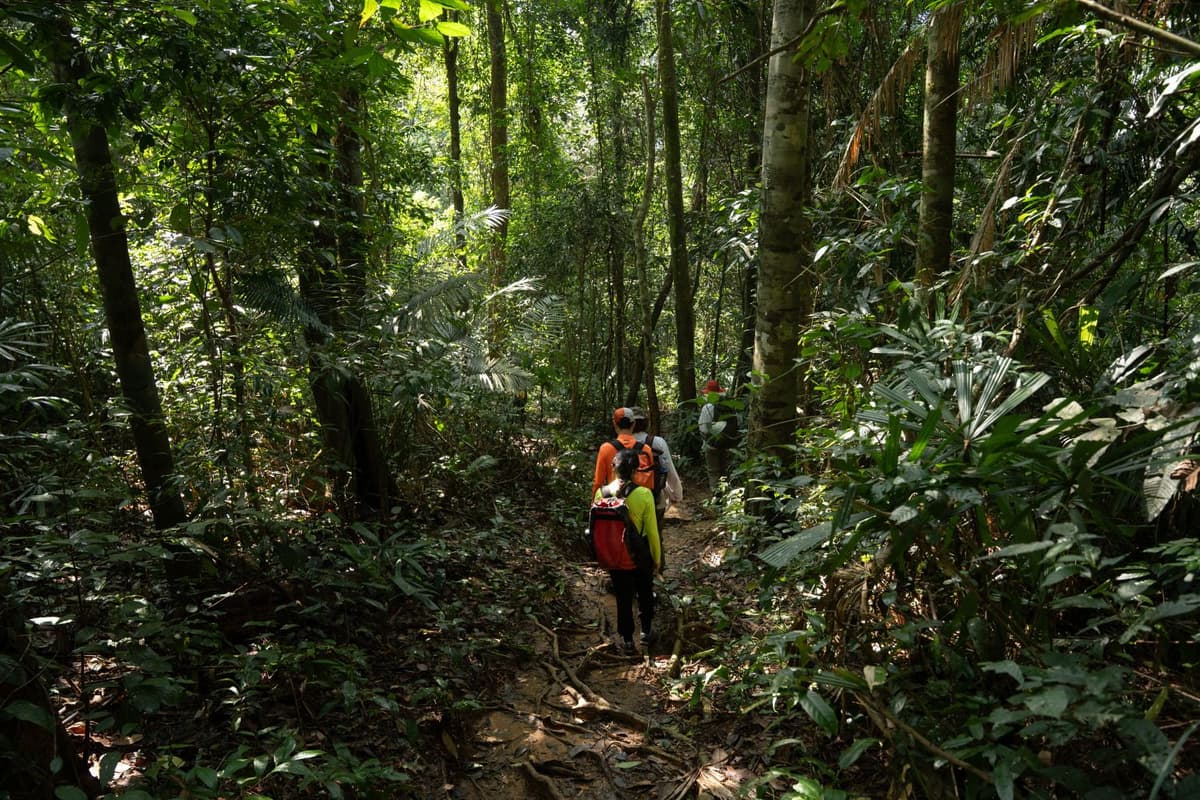
The Son Doong expedition tour lasts 6 days and 5 nights, covering a total distance of approximately 25 kilometers. It includes vast stretches of primary rainforest, crystal-clear streams that cross the trail, and a terrain that shifts from gentle forest slopes to rugged, rocky ascents. All of them come together to create an adventure that fully satisfies the spirit of exploration and challenge.
Over the course of 6 days and 5 nights, travelers complete four trekking days, each offering a distinct emotional and experiential rhythm. They will cross Hang En Cave, abseil into Hang Son Doong Cave, witness dramatic light beams illuminating Watch Out For Dinosaur, and conquer the 90-meter-high Great Wall of Vietnam.
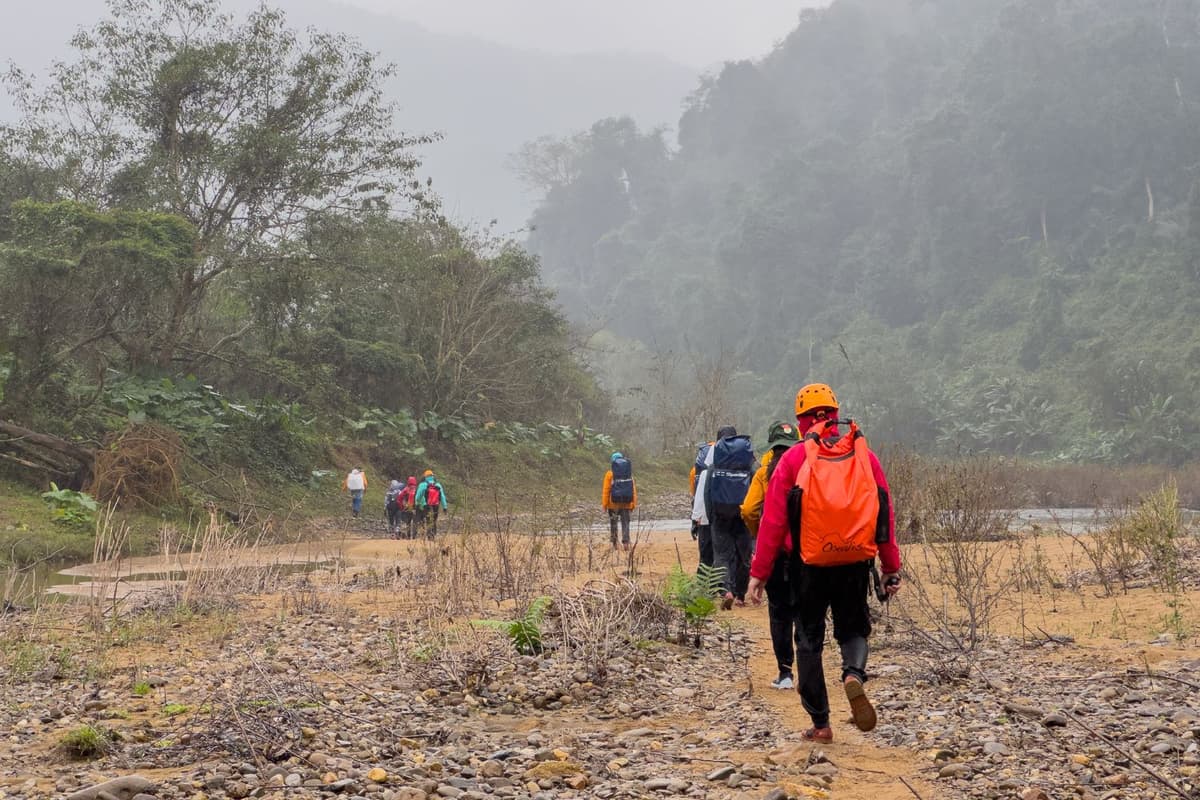
Approximately 60% of the route passes through outdoor landscapes, including forests, valleys, and rivers, while the remaining 40% involves trekking through the cave system.
The forest trekking sections are directly influenced by weather conditions in Phong Nha – Ke Bang National Park. It follows a tropical monsoon climate characterized by high humidity, abundant rainfall, and a clear distinction between the wet and dry seasons.
In contrast, Hang Son Doong Cave possesses its own distinct microclimate, functioning like a vast natural air-conditioning system hidden deep within the limestone massif.
Hang Son Doong Cave has a total volume of approximately 38.5 million m³ and a length of nearly 9 kilometers. Moreover, the underground river and natural airflow inside Son Doong Cave, created by two massive dolines, allow continuous air circulation and temperature regulation.
As a result, the temperature inside the cave remains stable at around 20 – 25°C throughout the year. It offers cool conditions in summer and comparatively warmer air during the winter months.
During winter (December to February), when Phong Nha – Ke Bang National Park is affected by the northeast monsoon, conditions inside Son Doong Cave remain relatively warm. When the Son Doong Expedition season opens each year in January, outside temperatures may feel cool. However, once travelers enter the cave, the environment resembles a vast natural heating system, with temperatures consistently maintained at about 20 – 25°C.
Most notably, the cave interior becomes exceptionally clear during this period, allowing visibility of up to one kilometer toward Doline 1.
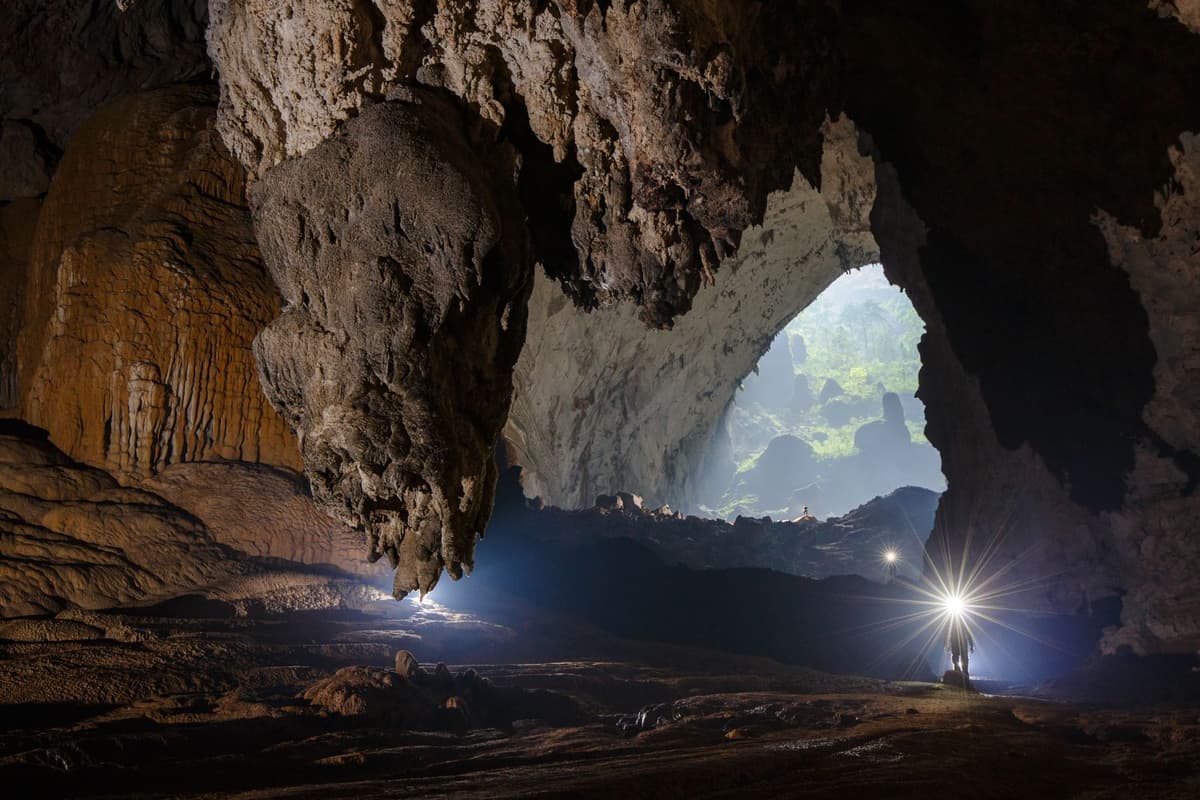
In spring (March to May), the temperature difference between the outside environment and the interior of Hang Son Doong Cave is minimal. As this is a transitional season, thin layers of mist occasionally form inside the cave. It softened the limestone landscape and added a subtle, atmospheric quality to the underground space.
In summer (June to August), when outdoor temperatures can rise to around 38°C, the interior of Son Doong remains refreshingly cool. At the cave’s dolines, where sunlight and airflow penetrate deep underground, these cloud layers shift gently as they interact with the external weather conditions. It creates a constantly changing and visually striking atmosphere.
One of the rare highlights of exploring Son Doong Cave in summer is the chance to witness the impression of all four seasons unfolding within a single moment at Doline 1.
Spring-like scenery emerges with delicate layers of mist drifting softly, gradually illuminated by the gentle sunlight of summer. As the clouds slowly dissolve into the light, the space transforms into a clear, crisp atmosphere reminiscent of autumn. When the light fades and cool breezes pass through the chamber, a subtle chill fills the air, quietly signaling the arrival of winter.
Notably, regardless of the time of year, whenever skies are clear and sunlight is present, a spectacular beam of light always descends into the cave from Doline 1. It illuminated the vast chamber below.
From September to December, Son Doong Expeditions are suspended during the rainy season to ensure safety and protect the natural environment. All campsites and equipment, both in the forest and inside the cave, are completely removed, allowing Son Doong Cave to return to its untouched state. This period of rest enables the ecosystem to recover naturally, preserving the cave’s pristine beauty for generations to come.
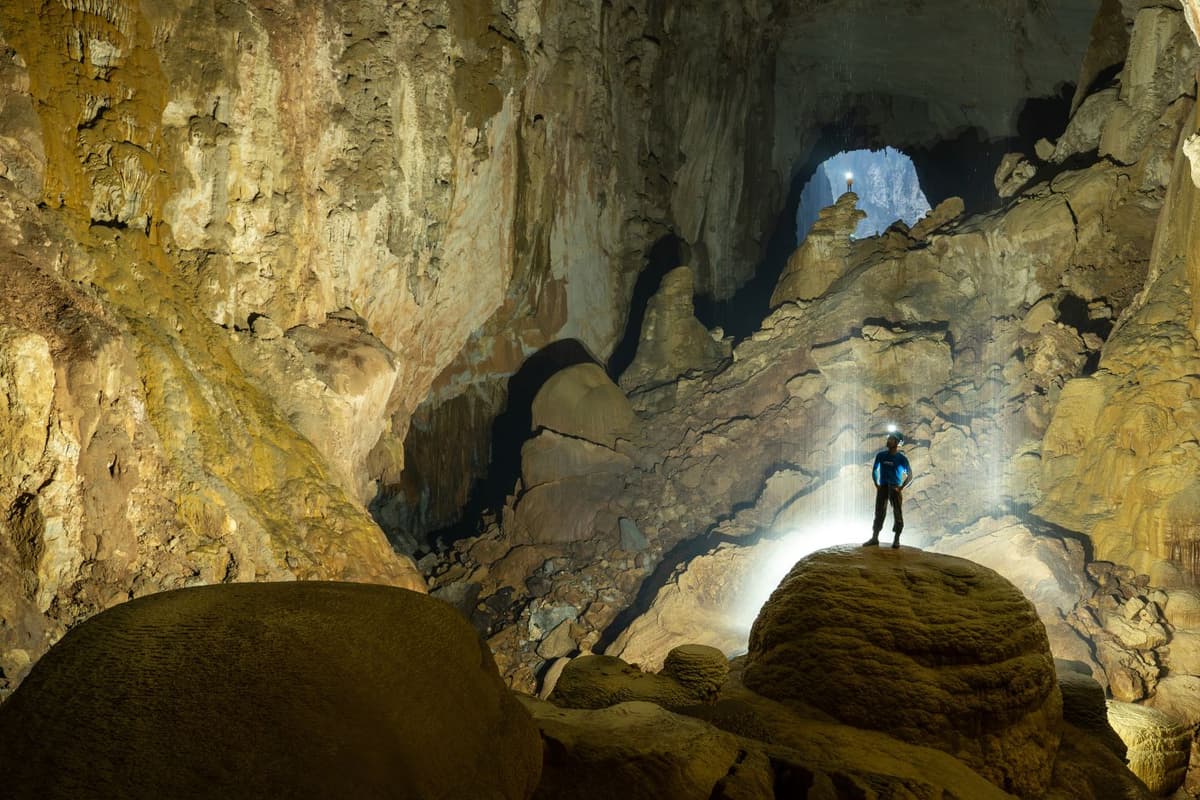
Each season, a different version of Son Doong Cave
January to March: The season of iconic light inside Son Doong Cave
From January to March marks the end of winter and the beginning of spring. Weather conditions alternate between cool air, cloudy skies, and periods of warm sunshine. Forest trekking during this time is more comfortable and less physically demanding.
Along the trail, the primary forest, having just passed through winter, reveals a raw and contemplative beauty, with deep green tones softened by a light veil of mist.
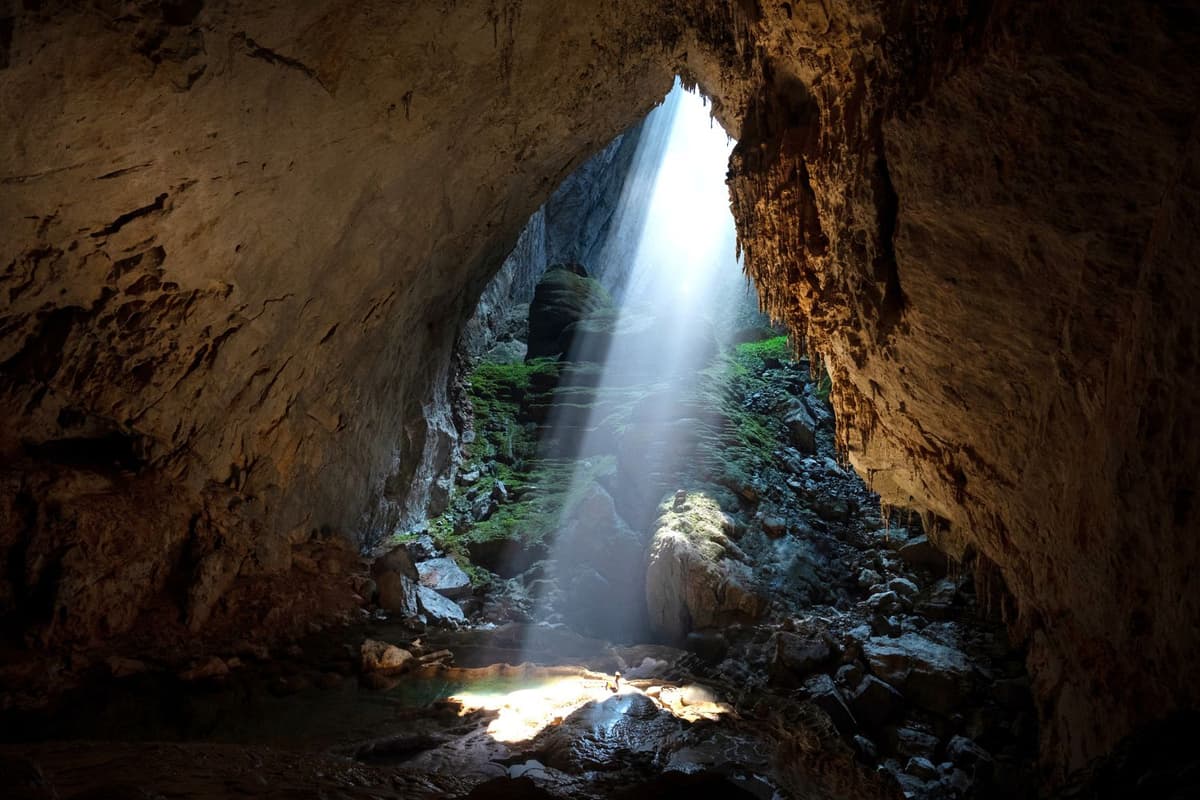
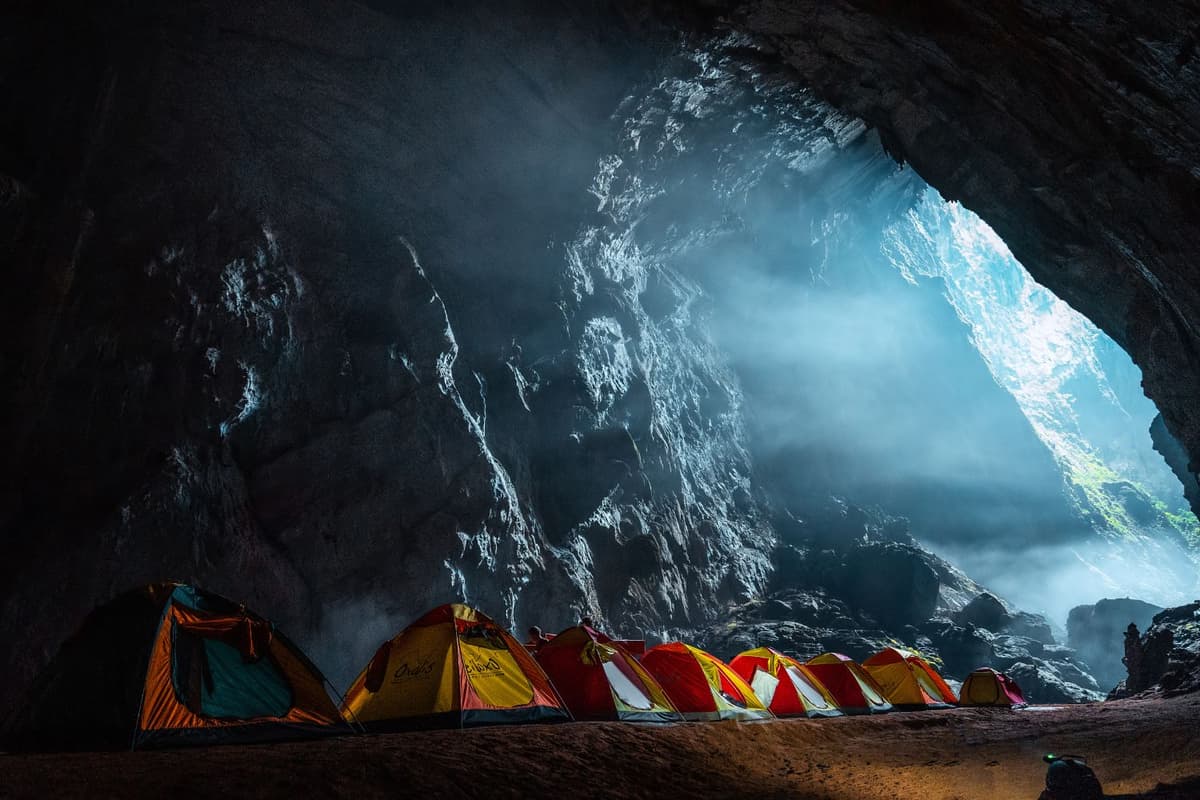
From January to March, the iconic sunbeam also appears inside Hang En Cave. It enters through the massive entrance and filters down the high rocky slope to illuminate the underground lake and campsite.
Travelers can witness this phenomenon on the morning of the second trekking day during the Son Doong Cave expedition.
On the morning of the third trekking day, as travelers reach Watch out for Dinosaurs at Doline 1, they have the opportunity to witness the most iconic sunbeam of Son Doong Cave. From the rim of Doline 1, rising approximately 449 meters, powerful shafts of sunbeam pierce through the opening and illuminate the colossal stalagmite formations below.
Beginning with a single ray filtering into the chamber, the sunbeam gradually expands and slowly sweeps across the Wedding Cake stalagmite. Then, it reached Watch out for Dinosaurs and created one of the most breathtaking moments of the entire expedition.
The Wedding Cake stalagmite resembles a stage designed by nature itself, while the descending sunbeam acts like a perfectly placed spotlight. This cinematic moment has captivated countless travelers and photographers, all eager to witness and capture the cave’s surreal and magical beauty.
April to May: Balance between scenery, experience, and physical endurance
If January to March is defined by Son Doong’s iconic light, then April to May is considered the most well-balanced period for the expedition. During this time, weather conditions transition into a warmer season with comfortable temperatures, neither too hot nor too cold, and many days of clear skies.
The stable climate allows for a steady trekking pace both in the forest and inside the cave, making it easier for travelers to adapt to the tropical environment throughout the journey.
Within Phong Nha – Ke Bang National Park, April to May marks a period of vigorous ecological growth. Wildflowers bloom sporadically along forest trails, the canopy shifts into fresh shades of green, and crystal-clear streams flow through the jungle. Swarms of butterflies fill the air, transforming the forest into a vivid and dynamic landscape bathed in golden sunlight.
The underground stream in Hang En Cave becomes crystal clear, reflecting a turquoise hue under natural sunlight. Inside Hang Son Doong Cave, the subterranean river, hidden within deep darkness, reveals a striking emerald glow when illuminated by headlamps. It resembles a massive jade ribbon winding through layers of limestone.
On the second and third trekking day, when entering Hang Son Doong Cave, travelers may encounter layers of mist and drifting clouds in the cave entrance, Doline 1, and Doline 2.
This phenomenon forms as moisture from the underground river condenses. It creates floating clouds near cave entrances, dolines, and in certain sections of the cave where the subterranean river flows through the chambers.
On the fourth trekking day, as travelers exit Son Doong Cave, they raft across a lake more than 400 meters long, Passchendaele Passage, toward the Great Wall of Vietnam. This section offers ample time to observe the geological formations that have shaped the towering limestone walls on both sides.
The experience is both visually overwhelming and quietly astonishing, often leaving travelers wishing the raft would move more slowly. Because they want to linger longer among these monumental limestone masterpieces.
When water levels recede, travelers will follow in the footsteps of the first Son Doong explorers. They wade through mud across the passage, famously likened to the Passchendaele battlefield, before ascending to conquer the Great Wall of Vietnam.
June to August: A cool summer beneath the Earth
Summer in Phong Nha brings many sunny days, with outdoor temperatures at times reaching 35 – 38°C. However, once the Son Doong expedition begins, the heat quickly fades, as most of the route passes beneath dense forest canopies and through the cave system.
Notably, on the second and third trekking days, the journey takes place almost entirely inside the cave, where conditions are largely unaffected by external weather.
Summer is also when the forest ecosystem reaches its peak of growth. Along the trekking trails, vegetation becomes lush and vibrant, and wildflowers bloom. Various forest fruits, such as wild guava and wild rambutan, begin to ripen, painting a lively and abundant picture of the tropical rainforest.
Streams and underground rivers become natural rest stops and cooling points, where travelers can swim and soak in refreshingly cool water. June also marks the breeding season of swifts. Hundreds of thousands of birds nested on the limestone walls of Hang En Cave. They leave the cave at dawn to forage and return in great flocks at dusk.
At this time, Hang Son Doong Cave functions like a natural air-conditioning system, maintaining a stable temperature of around 20 – 25°C. From the very entrance, travelers can clearly feel the cool airflow streaming out from deep within the cave.
On the third and fourth trekking days, travelers may encounter campsites, Doline 1, and the primeval forest at Doline 2 shrouded in gently drifting clouds. Bathed in sunlight and veiled in mist, the ancient forest takes on an ethereal quality, often evoking the image of a hidden Garden of Edam deep within the world’s largest cave.
On rainy days, Doline 1 can reveal a delicate curtain of cascading rainwater flowing over the Wedding Cake stalagmite. Viewed from the cave floor looking upward, this scene highlights the immense scale of the chamber and offers insight into the natural processes that shaped this iconic limestone formation.
Timing is only one part of the journey
Each period of the year brings its own distinctive moments. This is sometimes defined by light, sometimes by clouds, and sometimes simply by the sensation of moving deeper into a space completely separated from the outside world. No moment is ever the same, and no Son Doong expedition is ever identical to the one before.
Therefore, what truly determines whether travelers fully enjoy these moments is not the timing itself, but their expectations and level of preparation. A multi-day journey across complex terrain with continuous trekking demands strong physical fitness, mental resilience, and an adaptive mindset.
When the body is well prepared and the mind is fully ready, travelers can complete the entire journey. They will immerse themselves in the vast underground world and carry home memories that truly reflect the essence of Son Doong Cave.