


Amid the vast interior of the world’s largest cave, Son Doong may seem to be a realm of darkness and cold air. Yet nature once again reveals its wonders by creating a pristine jungle and a variety of rare flora and fauna right inside the cave. Tree roots weave through cracks in the limestone. Green moss carpets the cool rocky ground. And numerous animal species together form a vivid picture of life and resilience beyond imagination.
For travelers who seek to explore the majestic power and endless beauty of nature, Son Doong Cave and its rare flora and fauna will surely captivate every adventurous heart.
Overview of Son Doong Cave and its ecosystem
Son Doong Cave is located in the core zone of Phong Nha – Ke Bang National Park, within Phong Nha Commune, Quang Tri Province. This area has been twice recognized by UNESCO as a World Natural Heritage Site.
The primary forest system of Phong Nha – Ke Bang is formed from an ancient karst landscape over 400 million years old. It covers more than 123,236 hectares, providing a perfect habitat for 1,392 animal species and 2,954 plant species. Among them, 237 species are listed in the IUCN Red List, and 193 species are included in Vietnam’s Red Data Book.
Thanks to its unique location, combined with a complex geological structure and an underground river, two large dolines were formed inside Son Doong Cave. These openings allow natural light and airflow to enter the immense darkness of the cave. This creates a distinctive ecosystem with a pristine jungle that grows more than 252 meters below the surface. It is home to many endemic plant and animal species.
The Son Doong expedition is an extraordinary adventure that takes travelers deep into the ecosystem of Phong Nha – Ke Bang National Park. It explores hidden chambers and witnesses the incredible vitality that thrives beneath layers of ancient rock.
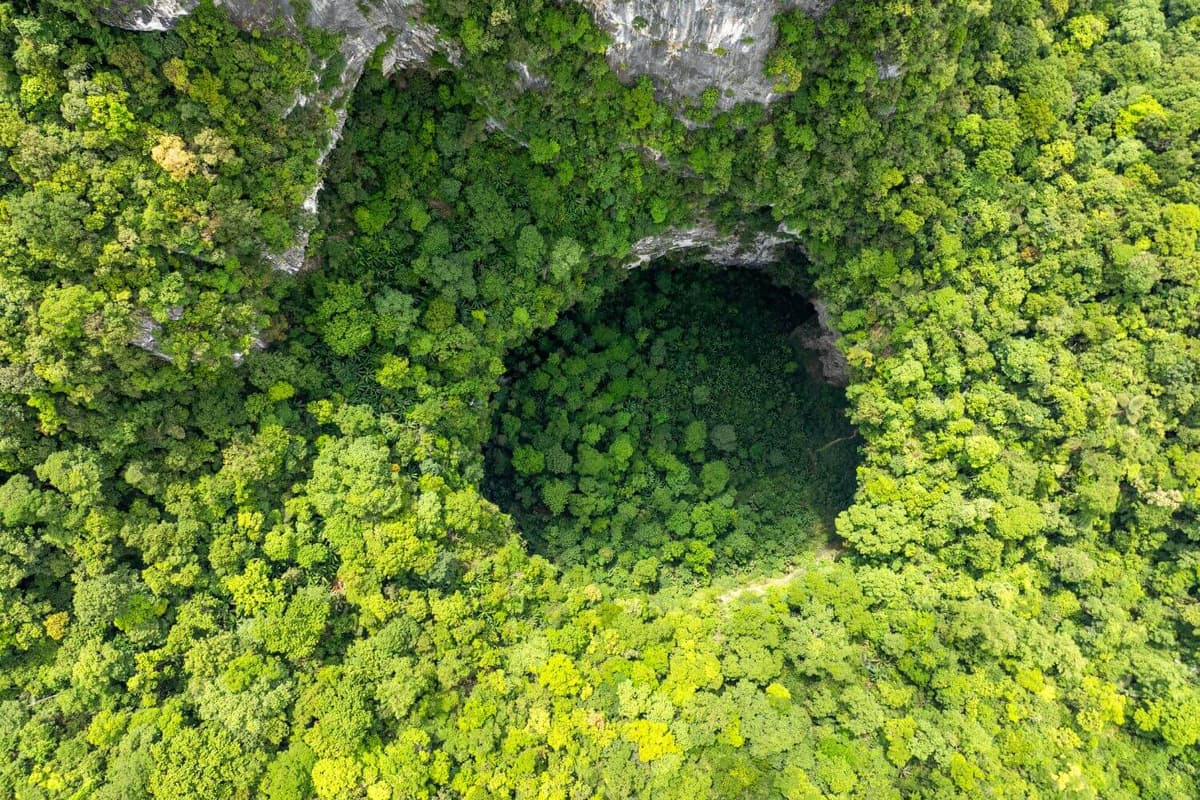
The pristine jungle and 200 plant species inside Son Doong Cave
According to explorers, around 500,000 years ago, a massive underground river continuously eroded the cave’s interior during the rainy and flood seasons. The powerful water flow eventually caused two sections of the cave ceiling to collapse. It formed two enormous dolines (sinkholes) in the middle of the cave.
Thanks to these formations, the cave is illuminated by natural light. The first doline is located about 3 kilometers from the entrance, and the second doline is situated roughly 1 kilometer farther from the first. The combination of sunlight, underground water, and humidity has created a closed ecosystem. This sustains more than 200 plant species, including mosses, algae, ferns, woody plants, and climbing vines.
The areas that receive limited sunlight, such as those near the dolines, are often covered with mosses, ferns, and small shrubs. Beneath the doline openings, where sunlight reaches more strongly, larger shrubs can grow well. It forms an entire underground forest within the cave.
At the first doline, travelers can admire a massive stalagmite formation nicknamed the “Wedding Cake” by explorers. It also has giant rimstone terraces covered in green moss, resembling cascading terraced fields.
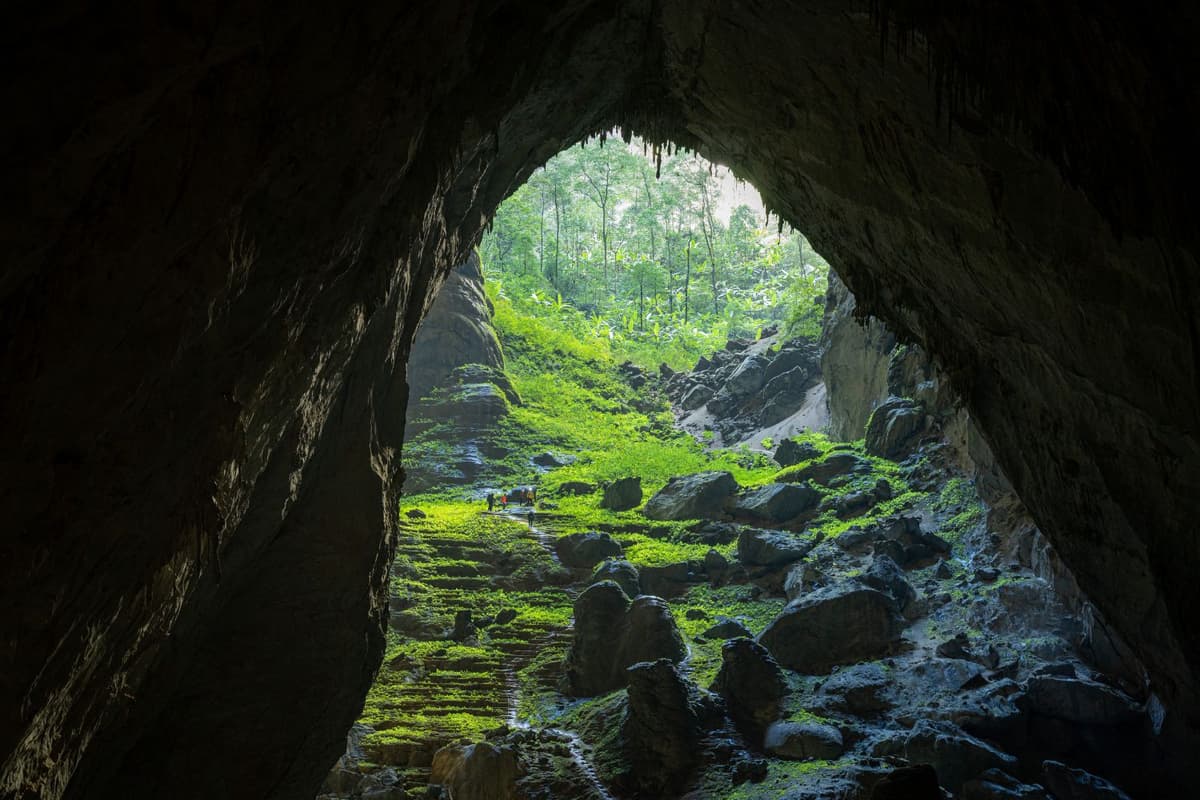
At the second doline, where sunlight is abundant, a pristine jungle spanning up to 175 meters has developed. Many woody plant species here have adapted their forms to survive in the unique cave environment. This underground forest is known as the “Garden of Edam,” home to 98 plant species, mostly herbs, shrubs, and eight species of woody trees.
In 2009, during the first survey of Son Doong Cave, explorers initially thought they had reached the cave’s exit when they arrived at the Garden of Edam. However, upon closer examination, they realized that this vast forest was actually nestled deep inside Son Doong. The towering limestone walls, covered in lush green moss and rising more than 250 meters high, form a massive natural skylight above the jungle.
Rare animal species inside Son Doong Cave
Stretching over 9 kilometers, Son Doong Cave features a complex interior with vast chambers and diverse formations. The constant transition between light and darkness, along with the presence of an underground river. It has created unique habitats for various animal species.
Researchers have discovered more than 203 insect species within Son Doong Cave and its surrounding areas. They include 144 species of butterflies, 80 species of arachnids, and many other distinctive organisms. Notably, in 2025, scientists from the Vietnam National Museum of Nature identified a new land snail species inside Son Doong Cave. This species was scientifically named “Calybium plicatus sp. nov” and given the Vietnamese name “Son Doong cone snail.”
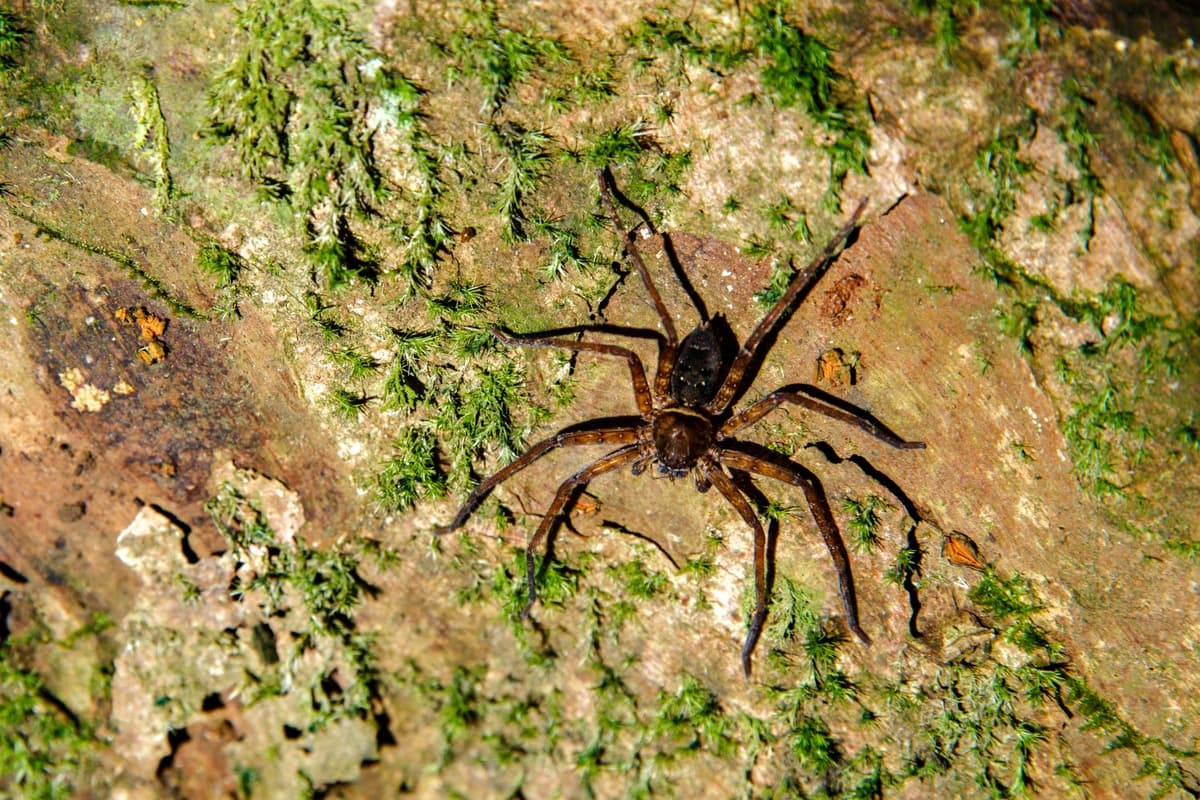
The entrance of Son Doong Cave, its two dolines, and especially the pristine jungle known as the Garden of Edam are home to light-loving species. They are birds, monkeys, and flying squirrels. In the early morning, travelers can even hear the fluttering sounds of birds echoing from deep within the jungle. Although these birds have not been clearly observed, experts believe, based on the sound of their wings, that they might be owls or eagles.
In the darker chambers, insects and animals such as crickets, millipedes, scorpions, and rock geckos have adapted to the eternal darkness. Most of them are eyeless, react slowly to environmental stimuli, and possess pale bodies. Experts have also identified several endemic species found only in Son Doong Cave. Some of them are an albino scorpion and a blind fish with a transparent body. The high ceilings shrouded in darkness serve as a habitat for countless bats.
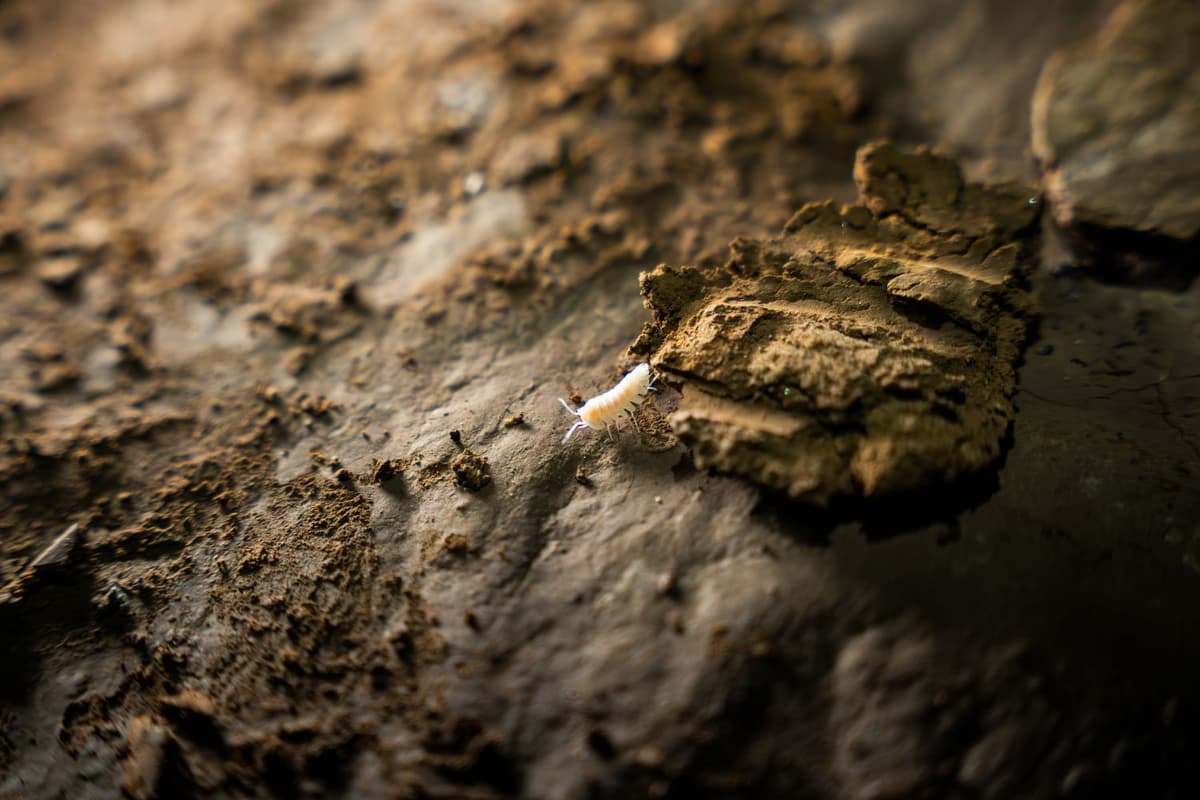
The flora and fauna inside Son Doong Cave have formed a self-sustaining ecosystem. Organic matter from bats and other small organisms enriches the soil, allowing the underground forest to thrive. The vegetation provides food for herbivorous species such as squirrels, millipedes, and crickets. Herbivorous species, in turn, become prey for carnivorous animals like bats, civets, and snakes.
When these animals die, fungi and microorganisms decompose their bodies, returning nutrients to the soil and supporting other living organisms. This continuous cycle of life has persisted for hundreds of thousands of years. It creates a diverse and self-sustaining ecosystem deep within the cave, hundreds of meters below the surface.
Conservation efforts and sustainable tourism in Son Doong Cave
To witness the remarkable vitality of life within Son Doong Cave, travelers must overcome the challenging terrain. They will gain a deeper appreciation for the wonder, grandeur, and fragility of nature.
Each tiny seed has taken nearly 500,000 years to grow into the lush jungle. Countless animal species have continuously evolved to adapt to this harsh environment. However, even a small, unintentional human impact can cause lasting harm to the delicate environment and ecosystem inside the cave.
For this reason, Oxalis Adventure, the only operator authorized to run expeditions to Son Doong Cave, places nature conservation as its highest priority. Each year, Son Doong welcomes only about 1,000 travelers, with a strict limit of 10 participants per tour.
Oxalis also uses water filtration systems at campsites and provides reusable water bottles to minimize plastic waste. Inside the cave, ropes are set up to mark designated pathways. Travelers are required to stay strictly within these marked areas to protect the fragile environment.
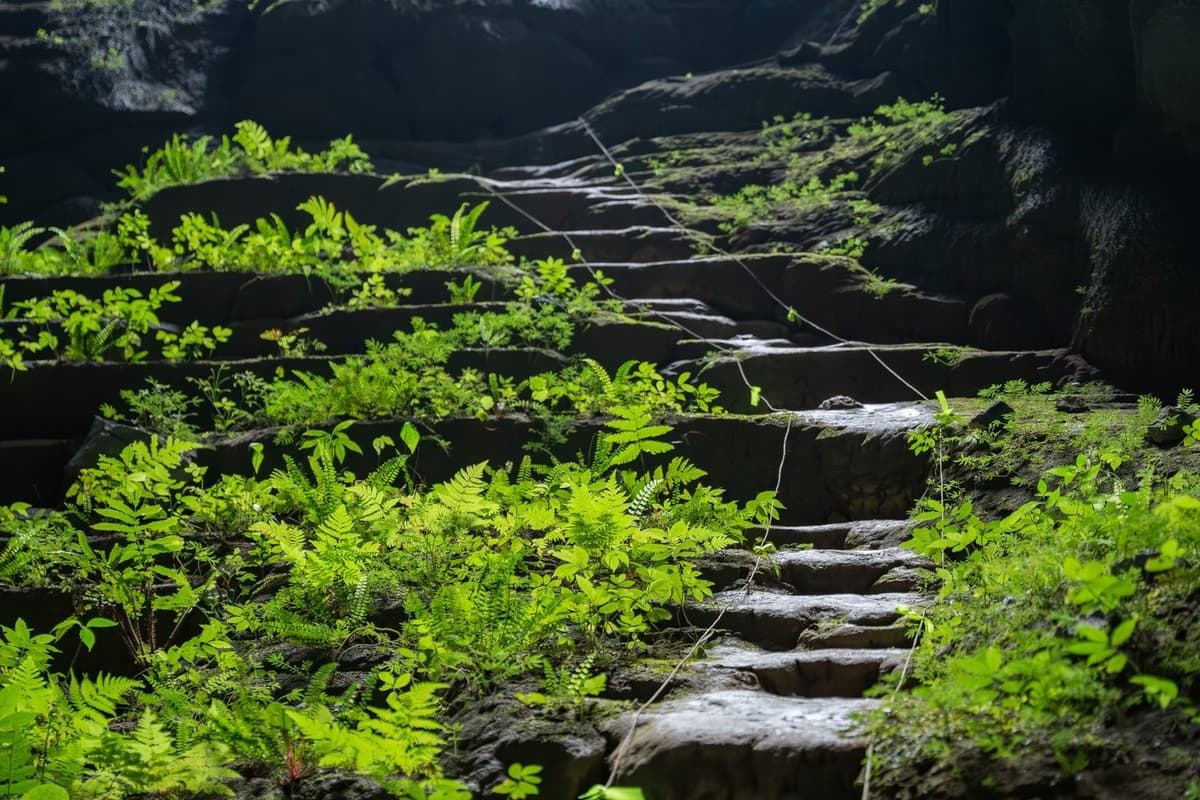
Campsites inside the cave are equipped with eco-friendly composting toilets. All waste, including trash and leftover food, is carried out of the forest after each trip. At the end of the tour season in September, all campsites inside the cave are dismantled. It is cleaned up to restore the environment to its natural state. When the new tour season begins in January, the campsites are reassembled for the next round of expeditions.
The Son Doong Expedition Tour operates only from January to August each year. From September to December, the tours are suspended due to the rainy season to ensure safety. This period also allows nature to rest and naturally recover.
In addition to Oxalis’s conservation efforts, travelers joining the Son Doong Expedition are also encouraged to take part in protecting the environment by following these guidelines:
- Do not touch stalactites, stalagmites, or capture any cave-dwelling creatures.
- Stay strictly on the marked paths and do not wander off inside the cave.
- Avoid using soap or chemical-based body wash when bathing in cave rivers or pools.
- Do not litter in the forest or inside the cave. Waste bins are provided at campsites, and all trash is collected and carried out of the forest.
- Refrain from talking loudly, shouting, or singing in the jungle and cave environments to preserve their natural tranquility.
The diverse ecosystem and the rare flora and fauna inside Son Doong Cave stand as a powerful testament to the resilience and wonder of nature. The ideal time for trekking and exploring Son Doong is from January to August. Travelers interested in joining the Son Doong Cave expedition can make reservations through the Oxalis Adventure website.
Currently, the Son Doong Expedition tour is fully booked through the end of 2027. The 2028 tour schedule is now open for booking, and reservations are filling up quickly. Travelers are advised to book early to secure their preferred dates or contact a travel consultant for more detailed information.